
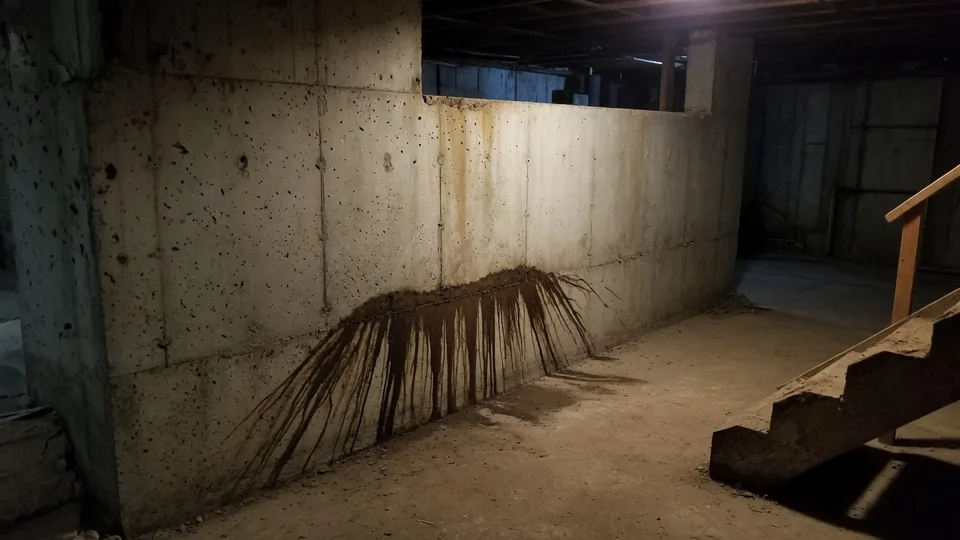
Hiring for a wet basement is not like hiring for a paint color. A patch job can look finished and still leave you with water after the next nor’easter. In Bergen County — mid-century foundations, settled lots, finished lower levels in towns like Paramus, Teaneck, Dumont, and Ridgewood — the difference between a pro and a patch is usually diagnosis and scope, not the thickness of a brochure.
This spoke helps you hire well. It pairs with the service overview at basement waterproofing and the related water cluster (French drains, yard drainage, water damage restoration when you are already in a loss).
What “good” looks like before anyone digs
A serious contractor:
- Asks when the water appears (during rain, after snowmelt, anytime)
- Wants to see the space wet when possible — or after a heavy rain
- Checks grade and downspouts before selling a system
- Names a water path (surface, slab-edge/cold joint, crack, under-slab pressure)
- Matches a system to that path — not one franchise product for every house
- Explains interior vs exterior trade-offs without slogans
- Puts discharge, sump backup, and warranty limits in writing
If the first visit is a ten-minute walk and a one-price “package,” keep interviewing.
Questions that separate pros from patch jobs
1. “What is causing my water — and how do you know?”
Pros talk mechanisms: reverse grade, short downspouts, cold joint seepage at the slab edge (common in many 1950s–70s foundations), wall cracks, or groundwater pressure verified on site. Patch jobs jump to “you need our system.”
Listen for: property-level language, not town stereotypes (“everyone in X needs exterior”). Flood-prone or Meadowlands-adjacent areas may present drainage constraints — still verify your house.
2. “Can grading and downspouts solve part of this?”
Pros check the free-ish fixes first. Many wet basements improve when roof water stops loading the foundation. If they never look outside, they are selling trenches.
3. “Interior perimeter drain, exterior dig, or both — why?”
Interior collection to a sump is a legitimate tool for slab-edge and many collection cases. Exterior membrane and footing drains are tools for other conditions and access. Neither is always better. Coatings alone are not a hydrostatic fix.
Ask them to explain why their recommendation fits your path — in plain English.
4. “Where does the water discharge, and what happens in a power outage?”
Discharge that recirculates to the foundation is a design failure. In storm-outage weather, a battery backup (or equivalent) on a sump is a serious design detail, not an upsell cartoon. Ask what is included.
5. “What does the warranty actually cover?”
Read exclusions: materials only vs workmanship, sump failure, exterior water, grading changes, acts of weather. “Lifetime warranty” language means little until you know the scope. Ask for the document before deposit.
6. “Who pulls permits, and what does the town require?”
Requirements vary by municipality and scope. Interior work, new sumps, and exterior digs have different stories. Confirm with the Authority Having Jurisdiction (AHJ — your local building department) for the job address. Pros do not invent a single countywide rule.
7. “How do you protect a finished basement during work?”
Finished lower levels raise the stakes. Dust, slab cuts, and temporary water management need a plan. Vague answers become expensive messes.
8. “What is excluded from this price?”
Landscaping restore, hardscape, electrical for pumps, battery units, rock, and utilities are classic exclusions. A clean low number can be incomplete.
9. “Can I see a written scope that names the system components?”
Pipe, stone, fabric, basin, pumps, discharge path, membrane type (if exterior), and inspection sequence. Product photos without a scope are marketing.
10. “What would make you refuse this job or recommend a different path?”
Pros know when to send you to structural engineering, when water damage restoration must come first, and when a coating sales pitch would be dishonest.
Red flags (walk away patterns)
- Paint-on sealer sold as the full fix for active seepage
- “Interior never works” or “exterior is always required” as slogans
- No rain-day diagnosis interest
- Pressure same-day sign with large deposit and no written scope
- Warranty that cannot be handed to you in writing
- No discussion of grade, gutters, or discharge
How to prepare for the visit
- Photos or video of water during/after rain
- Notes on when it started and which walls/corners
- List of prior “fixes” (sump, paint, French drain claims)
- Access to exterior grade and downspouts
- Your questions printed — so the sales script does not own the meeting
Cost context (so you can compare bids)
Rough pattern ranges (~2026), always site-specific: interior perimeter + sump typically low–mid thousands to about $10k+; full exterior dig/membrane often about $20k–$30k+ with restore. Compare inclusions, not only the bottom line. Two bids with different systems are not comparable until you understand why each was chosen.
After you hire
Expect a clear start window, protection plan, and end-of-job walkthrough: where water goes, how to test the sump, what maintenance you own (battery checks, discharge clearance, gutters). Keep the warranty and scope with your house file.