
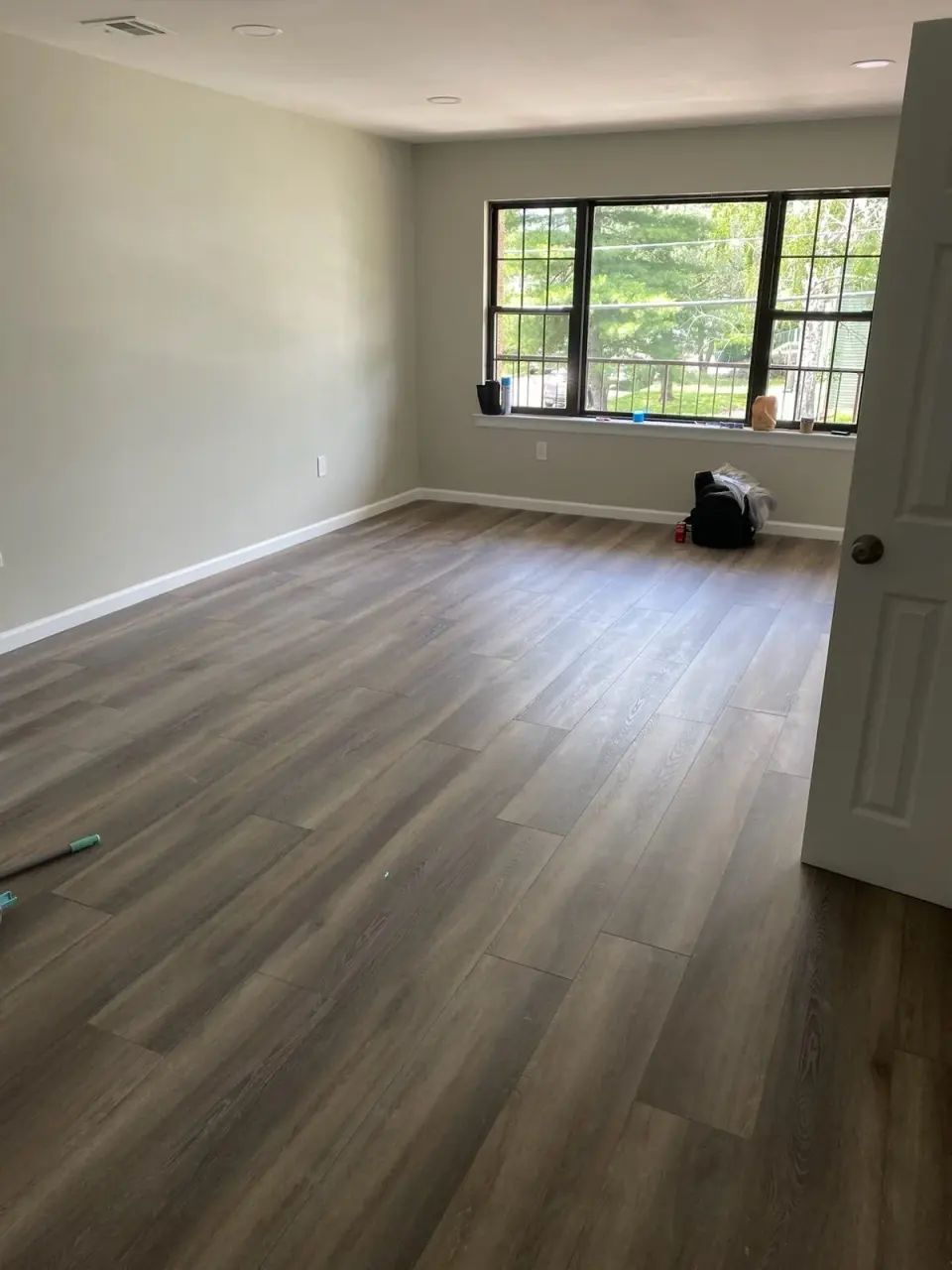
Flooring Installation
Hardwood, LVP, and tile with the prep done right — moisture tested, subfloors flattened, transitions clean. The material is half the job; the other half is under it.
Expert Flooring Installation
The right floor changes how a room looks and feels. We install hardwood, luxury vinyl plank, porcelain tile, and laminate with proper subfloor prep, transitions, and trim work so your new floors perform and look right for years.
- Hardwood installation & refinishing
- Luxury vinyl plank (LVP) & tile
- Porcelain & ceramic tile
- Laminate & engineered wood
- Subfloor leveling & preparation
- Transitions, baseboards & trim
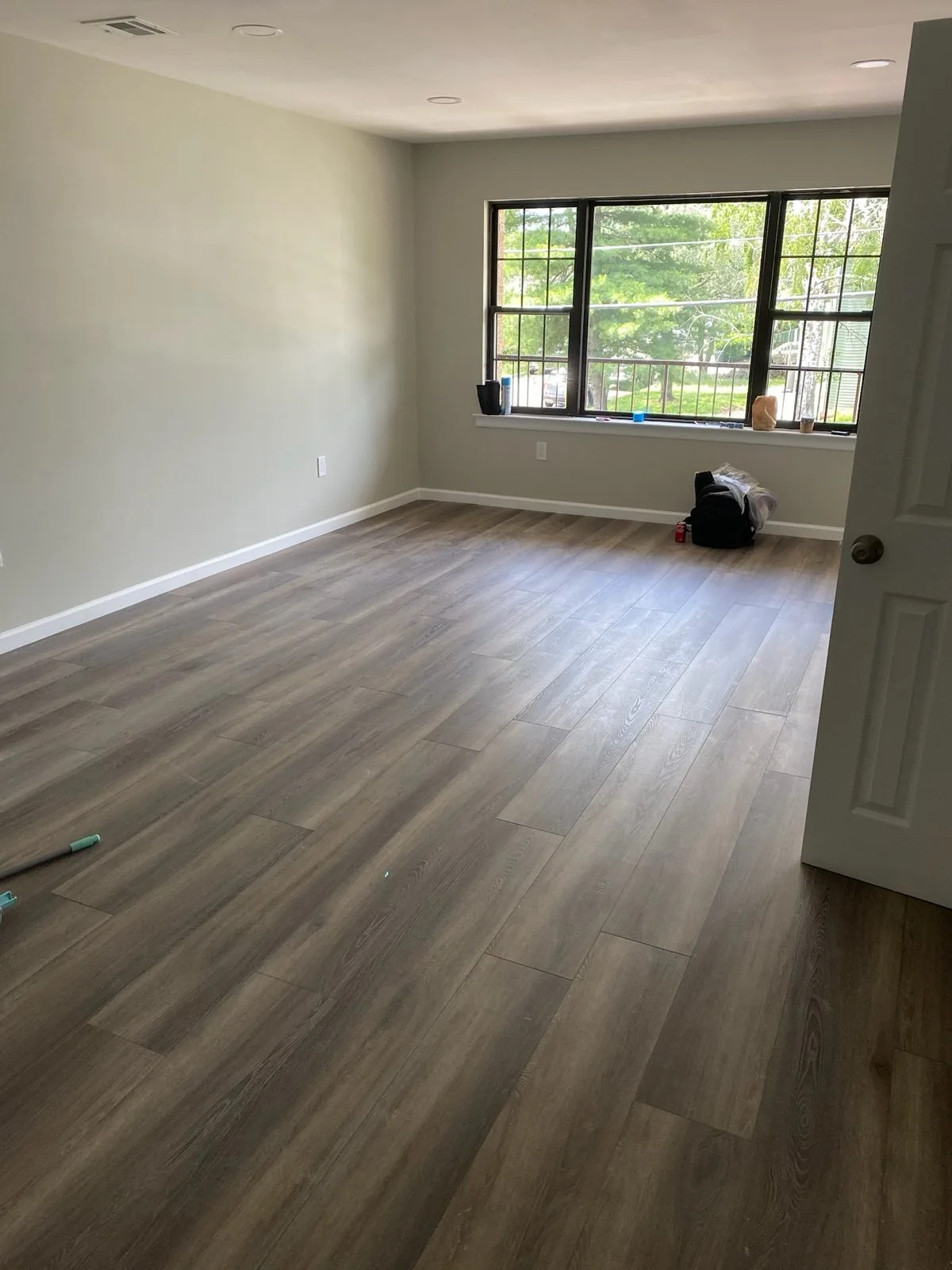
Flooring Installation Guides
Material, subfloor, and timing decisions that determine whether the floor lasts 10 years or 30.
Flooring Material Guide
Hardwood, engineered, LVP, tile, stone, carpet. Each chosen by room moisture exposure, traffic, comfort priority, and budget. The right material is room-specific, not house-wide.
- Moisture rules first: bathrooms, basements, and mudrooms eliminate options before style enters — waterproof there, wood where life is drier.
- Traffic honesty: entries and kitchens punish soft species and cheap wear layers; bedrooms forgive almost anything.
- Comfort priorities: warmth and quiet favor wood and LVP over tile — unless radiant heat flips the table.
- One-floor strategy: fewer materials across a level reads calmer and larger; transitions are where floors look busy.
- Budget honestly: material is half the cost; prep and install quality decide how any of it performs.
Planning a project like this? Get an estimate.
Hardwood vs Engineered Wood
Solid hardwood refinishes 4–6 times over decades but moves with humidity. Engineered wood is more dimensionally stable for basements and over radiant heat but refinishes once or not at all.
- Refinish ceiling: solid sands 4–6 times over generations; engineered 1–2 depending on wear layer.
- Stability: engineered’s cross-ply core shrugs off humidity swings that gap and cup solid boards.
- Where each belongs: solid above grade on plywood; engineered anywhere — including slabs and radiant.
- Feel parity: glued or nailed quality engineered is indistinguishable underfoot from solid.
- Cost reality: similar species run similar prices; the choice is placement and future refinishing, not budget.
Planning a project like this? Get an estimate.
Tile, Stone & Waterproof Flooring
Porcelain for durability, ceramic for budget, natural stone for design impact, LVP for waterproof flexibility. Grout color, tile size, and substrate prep all affect look and life.
- Porcelain: dense, waterproof, near-zero maintenance — the hard-surface benchmark for wet rooms and heavy traffic.
- Ceramic: the budget wall-and-light-floor cousin; honest where traffic is polite.
- Natural stone: unmatched presence, real sealing and care requirements — a design decision, not a default.
- LVP: waterproof flexibility with warmth and quiet tile can’t offer; the basement and whole-first-floor workhorse.
- Substrate & grout: decoupling membranes, flat substrates, and quality grout decide how all of them age.
Planning a project like this? Get an estimate.
Subfloor & Underlayment
Subfloor flatness, moisture content, and underlayment selection (cork, foam, dimpled subfloor) all determine whether the finish floor stays flat and quiet.
- Flatness spec: 3/16″ over 10 feet for most floating floors — tighter than most real subfloors, which is why prep is real scope.
- Moisture check: wood subfloors and slabs both get metered before anything commits; readings drive underlayment choice.
- Underlayment jobs: sound damping, moisture separation, and warmth — cork, foam, and dimpled systems each solve a different one.
- Squeak elimination: loose sheathing gets screwed down during prep — the cheapest moment to silence a floor forever.
- Height planning: stacked layers change floor height; doors, appliances, and stair nosings are checked before install day.
Planning a project like this? Get an estimate.
Install Timeline & Room Prep
Furniture removal, baseboard and trim handling, acclimation period for wood, and dust containment. Most rooms install in 1–3 days; whole-house in 1–2 weeks.
- Acclimation: wood products sit in the room 3–7 days reaching moisture equilibrium; skipping it is how floors gap by winter.
- Room turnover: furniture out, trim handled (removed and reinstalled or scribed), floors in, trim closed — we sequence whole houses room by room.
- Dust control: sanding and cutting run with extraction and sealed doorways; flooring work shouldn’t coat the house.
- Typical spans: single rooms 1–3 days; whole-house projects a week-plus depending on material and prep.
- Same-day rooms: LVP and prefinished products take furniture back immediately; site-finished wood needs cure days.
Planning a project like this? Get an estimate.
Cost, Warranty & Maintenance
LVP $7–$12/sq ft installed; engineered wood $10–$22; solid hardwood $14–$28; porcelain tile $12–$22. Manufacturer warranties depend on professional install.
- 2026 ranges: LVP $7–$12/sq ft installed; engineered wood $10–$22; solid hardwood $14–$28; porcelain tile $12–$22.
- What moves the number: subfloor prep, pattern work, stairs, and furniture handling — the line items around the material.
- Warranty reality: manufacturer coverage depends on product, install to spec, and the manufacturer’s own terms — reviewed before you sign.
- Maintenance ladder: LVP and tile ask for almost nothing; wood asks for humidity sanity and a refinish horizon.
- Cost per year: the honest metric — a $22 floor serving 60 years beats a $9 floor replaced twice.
Planning a project like this? Get an estimate.
Your Flooring Installation Process
Consultation
We visit your home, review scope and priorities, measure, and align on materials and timeline.
Design & selections
We finalize materials, finishes, schedule, and a written scope so the project starts with clear expectations.
Build
Crew executes the build with organized scheduling, regular check-ins, daily cleanup, and trade coordination.
Walkthrough
Final walkthrough together, punch-list closeout, warranty registration, and project sign-off.
Which Floor Where — and Why
The right floor is a moisture and traffic decision before it’s a style decision. The honest comparison:
Hardwood, LVP, tile
Hardwood is the long-game floor — refinishable for decades, but it moves with humidity. LVP shrugs off water and dogs and busy kitchens at a friendlier number. Tile owns wet rooms outright. Most houses end up with two of the three, placed deliberately.
The Bergen County floor rule
Below grade, moisture wins every argument. Slab humidity in Bergen County basements rules out solid hardwood down there — basement flooring means LVP, engineered products, or tile over a tested, prepped slab. Test first; a moisture reading costs nothing compared to a cupped floor.
What quality prep includes
Leveling the subfloor, letting material acclimate on site, correct underlayment, expansion gaps, and clean transitions between rooms. Flooring fails at the prep stage far more often than at the material stage — which is why prep is written into our scope, not assumed.
Sequencing a whole-house floor
Matching product across connected rooms, running direction, and where transitions land — decided once, before ordering. Doing floors room-by-room over years without a plan is how a house ends up with five almost-matching browns.
Floors Follow the Subfloor
Flooring failures are usually substrate failures. Moisture in basements, uneven joists, and thin underlayment show up as peaking, hollow spots, or cupping months later. We check the slab or subfloor before materials ship.
Hardwood, LVP, and tile each want different flatness and moisture conditions. Transitions at stairs and doorways are planned so heights do not create trip edges after install.
For basements with water history, pair flooring with waterproofing or basement flooring guidance. Request an estimate with room list and any moisture concerns.
Built Around Floor Material
Hardwood, LVP, and tile installation — pick the material that matches your room, budget, and traffic.
Hardwood Flooring
Solid and engineered hardwood. Site-finished or prefinished. Multiple species and pattern options.
Explore this optionLVP & Rigid-Core Flooring
Waterproof SPC and WPC products for kitchens, baths, basements, and busy living areas.
Explore this optionTile Flooring
Porcelain, ceramic, and natural stone with proper decoupling membrane and subfloor prep.
Explore this optionFrequently Asked Questions
Hardwood (solid + engineered), luxury vinyl plank (LVP), laminate, porcelain tile, ceramic tile, natural stone, and specialty installations like radiant-heat flooring.
Usually. For refinishing we match stain + sheen; for adding on to existing runs we source same species or close visual match.
Yes. Leveling, squeak elimination, moisture barrier, plywood layer, and proper underlayment are part of the install scope.
Every project uses a milestone payment schedule tied to agreed phases — set out in writing in your contract. Homeowners who want to finance work typically use third-party home-improvement lenders; we're happy to share the names of lenders other clients have used. Any financing arrangement is between the homeowner and the lender.
For most Bergen County residential projects, 3 to 8 weeks from contract signing to on-site start. Summer and early fall fill fastest. Flooring projects are scheduled after measurements, material selection, subfloor review, and delivery timing. Water-damaged flooring may require mitigation and drying before replacement.
Usually not. Furniture moves room-by-room as work progresses. For whole-home replacement, furniture storage or staging works well.
Site-finished gives more stain + finish flexibility and smoother seams. Pre-finished is faster to install and finish is factory-consistent. Most homeowners pick based on timeline + finish flexibility needs.
Sometimes. LVP and laminate can float over many existing floors. Tile and hardwood usually require existing flooring removal. We assess during consultation.
Electric mat systems under tile add $15–$25/sq ft installed. Engineered hardwood works over hydronic radiant with proper underlayment.
All 70 Bergen County municipalities. Residential only.
Yes. Bergen Restoration is a registered New Jersey Home Improvement Contractor (NJHIC# 13VH08865500) with commercial general liability and workers’ compensation coverage; documentation available on request.
Related Bergen service: Basement Flooring. Related reading: Hardwood, LVP & tile flooring compared.
Get Your Estimate
Reach us by phone or email and tell us about your flooring installation project. We will follow up with the next best step for your home.
Commercial general liability and workers’ compensation coverage. Documentation available on request.
Let's Talk About Your Project
Tell us what you have in mind — we'll follow up with a plan.