
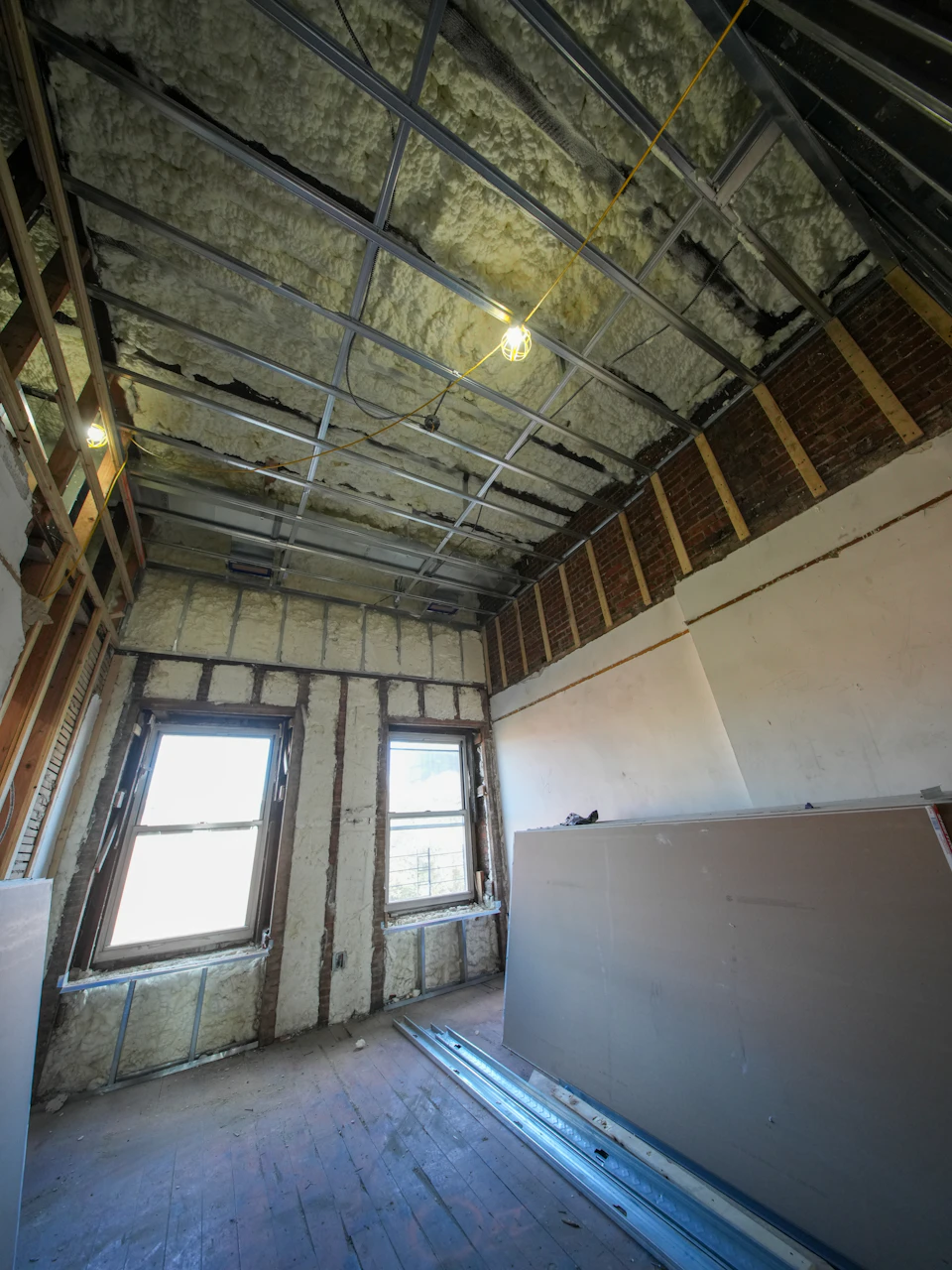
Insulation & Energy Efficiency
Attic, wall, rim-joist, and crawlspace insulation plus air sealing for Bergen County homes — a warmer, quieter house with lower heating and cooling bills, R-value and moisture planned together.
Insulation & Energy Efficiency
From sealing the leaks that drain your heat to bringing an attic up to a proper R-value, we handle the whole envelope. Our team measures what is there, seals the air first, then adds the right insulation — balancing ventilation and moisture so the house is warmer, quieter, and cheaper to run.
- Attic insulation — blown-in cellulose, fiberglass & batt
- Spray foam for rim joists & tight assemblies
- Wall, crawlspace & basement insulation
- Air sealing — gaps, penetrations & top plates
- R-value upgrades to NJ climate targets
- Ventilation & moisture balance, ice-dam prevention
Serving homeowners throughout all 70 Bergen County municipalities. View our Bergen County service areas.
Related services: Attic Conversions, Roof Repair & Replacement, Basement Waterproofing, and Whole-Home Renovation.
Plan Your Energy Upgrade With Confidence
Air sealing vs insulation, material tradeoffs, R-value targets, moisture and ventilation, and project cost ranges.
Air Sealing vs Insulation
These solve different problems. Insulation slows heat moving through a surface; air sealing stops conditioned air escaping outright. On most Bergen homes, sealing first is the bigger lever — and it comes before adding an inch of insulation.
- Air sealing (the leaks): caulk, foam, and gaskets at top plates, penetrations, and gaps — typically the highest-return single move.
- Insulation (the R-value): adds resistance to heat flow once the leaks are closed; adding it over a leaky attic underperforms.
- Sequence matters: seal the attic floor, then blow insulation on top — doing it in reverse buries the leaks you needed to reach.
- Comfort payoff: fewer drafts, more even room-to-room temperatures, and less outside noise, alongside the bill impact.
- Bill impact: the combination can meaningfully reduce heating and cooling costs, though actual savings depend on your home and systems.
- Whole-envelope view: attic, walls, rim joist, and crawlspace are weighed together so budget goes where it returns most.
Planning a project like this? Get an estimate.
Signs You Need Insulation
An under-insulated, leaky house tells on itself. These are the common tells we look for during an assessment — several together usually point to air sealing plus an attic top-up.
- Rooms that never hold temperature: cold in winter, hot in summer, uneven floor to floor.
- Heating and cooling bills climbing: a system that runs constantly is often fighting leaks, not weather.
- Drafts at outlets, baseboards, and attic hatch: classic air-leakage paths through the envelope.
- Ice dams or icicles at the eaves: heat escaping into the attic melts roof snow that refreezes at the edge.
- Dust streaks or dark lines at the ceiling: air moving through gaps in the insulation above.
- Older home, original insulation: many pre-1990 Bergen attics sit far below today’s R-value targets.
Planning a project like this? Get an estimate.
Insulation Materials
No single material wins everywhere. The right choice balances R-value per inch, air-sealing ability, cost, and the assembly it is going into. A typical Bergen project mixes two or three.
- Blown-in cellulose: dense, fills irregular attic cavities well, good value; the common attic top-up choice.
- Blown-in fiberglass: lightweight attic fill, resists settling, pairs well with a sealed attic floor.
- Fiberglass or mineral-wool batt: economical in open, standard-spaced framing; only as good as the fit — gaps cost R-value.
- Open-cell spray foam: air-seals and insulates in one step; strong in walls and hard-to-reach cavities.
- Closed-cell spray foam: highest R-value per inch and a moisture barrier; the go-to at rim joists and tight spaces, at a premium.
- Rigid foam board: continuous insulation for basement walls and rim joists where a hard, moisture-tolerant panel fits.
Planning a project like this? Get an estimate.
Moisture & Ventilation
Insulation and ventilation are one system. Tighten a house without balancing airflow and you can trap moisture and cause condensation — so we plan the two together, never in isolation.
- Attic ventilation: soffit-to-ridge airflow keeps the roof deck cold and dry after the attic floor is sealed.
- Baffles at the eaves: keep blown-in insulation from blocking the soffit vents it needs to breathe.
- Vapor control: managed to the assembly so warm indoor moisture does not condense inside walls or the attic.
- Bath and kitchen exhaust: vented to the outside, never into the attic, so humidity leaves the house.
- Rim joist and crawlspace: sealed and insulated with moisture in mind, a frequent hidden damp source.
- Ice-dam link: a cold, well-ventilated roof deck curbs the melt-refreeze cycle that drives ice dams.
Planning a project like this? Get an estimate.
R-Value Targets & Rebates
R-value measures resistance to heat flow — higher is warmer. Bergen County sits at the cooler end of New Jersey (roughly climate Zone 5), so the targets below are typical starting points; we measure what is there before recommending.
- Attic: commonly brought up to about R-49 to R-60; many older Bergen attics are far below this.
- Walls: generally targeted around R-13 to R-21 depending on framing and method.
- Floors over unconditioned space: often around R-19 to R-30.
- Crawlspace / basement walls: typically R-10 to R-15 continuous where appropriate.
- Energy audits: for a formal audit or blower-door test we can point you to and coordinate with a certified energy auditor rather than claim that certification ourselves.
- Utility rebates: NJ Clean Energy and utility programs sometimes offset insulation and air-sealing costs; we can help you find and coordinate the current programs.
Planning a project like this? Get an estimate.
Cost & Timeline
Insulation work ranges from a one-day attic job to a multi-day whole-envelope scope. Figures below are 2026 Bergen County planning ranges — your written estimate follows once we have seen the spaces.
- Attic air sealing: often 1 day; the highest-return starting point.
- Blown-in attic top-up: typically 1–2 days including sealing prep.
- Rim-joist spray foam: usually 1 day, frequently paired with basement work.
- Crawlspace or basement walls: 1–3 days depending on access and condition.
- Whole-home / multi-area scope: several days to about a week.
- Access matters: tight attics, finished walls, and clearing stored items can extend the schedule.
Planning a project like this? Get an estimate.
Pricing and timelines are planning ranges. Final cost and schedule depend on site conditions, access, structural requirements, materials, permit review, inspections, weather, material lead times, and scheduling availability.
Your Insulation Project Process
Assessment
We inspect attic, walls, rim joist, and crawlspace, gauge current R-value, air leakage, and ventilation, and note any moisture before recommending a scope.
Scope & plan
We finalize materials, R-value targets, the seal-then-insulate sequence, ventilation details, and any trade or permit coordination required.
Seal & insulate
Crew air-seals the gaps and penetrations first, then installs insulation to target, with daily cleanup and regular check-ins.
Verify & cleanup
Coverage, depth, and ventilation review; baffles and airflow confirmed; punch-list closeout and documentation.
Seal, Insulate, or Both?
A cold, expensive house usually has more than one cause — here is how we read which lever matters most:
Drafts, not thin insulation
Cold rooms, a furnace that never rests, dust streaks at the ceiling. Air leaking through top plates, wire and pipe penetrations, and gaps is the biggest single drain — sealing it is usually the highest-return move, and it comes before adding a single inch of insulation.
The R-value is simply too low
Many older Bergen attics sit well below today’s roughly R-49 to R-60 target for our climate. Once the floor is sealed, blowing insulation up to depth is the most cost-effective comfort and bill upgrade — and it helps keep the roof deck cold enough to curb ice dams.
Spray foam vs batt vs blown-in
Batt suits open, standard framing on a budget; blown-in fills attics and irregular cavities more completely; spray foam seals and insulates in one step and shines at rim joists and tight spaces, at a higher cost. The assembly, access, and moisture decide the mix — not the brochure.
Insulation and ventilation together
Sealing a house tight without balancing airflow can trap moisture and breed condensation. We plan attic ventilation, baffles, and vapor control alongside the insulation — so you get the comfort and the lower bills without being sealed into a moisture problem.
Insulating the Whole Envelope
Attic, walls, rim joist, and crawlspace each lose heat differently — and each takes a different material to fix.
Attic Insulation & Air Sealing
Seal the attic floor at penetrations and top plates, then blow in cellulose or fiberglass to a proper R-value. The single most cost-effective comfort and bill upgrade on most Bergen homes — and the one that curbs ice dams.
Walls, Rim Joist & Crawlspace
Batt in open framing, spray foam where the rim joist and tight spaces leak hardest, and crawlspace or basement work to close the floor of the house. Matched to the assembly, with moisture and ventilation planned in.
Frequently Asked Questions
Attic insulation (blown-in cellulose or fiberglass, batt, and spray foam), wall, rim-joist, crawlspace and basement insulation, air sealing of gaps and penetrations, R-value upgrades to current NJ targets, and moisture and ventilation coordination so insulation and airflow are balanced together.
Usually air sealing first. Insulation slows heat moving through a surface, but air leaks at top plates, penetrations, and gaps let conditioned air escape outright. Sealing those leaks is typically the biggest single lever for comfort and heating and cooling bills; we sequence sealing before or alongside adding insulation.
Batt suits open, standard-spaced framing on a budget. Blown-in cellulose or fiberglass fills attics and irregular cavities more completely and settles into gaps batt leaves. Spray foam air-seals and insulates in one step and is strong at rim joists and tight spaces, at a higher cost. The right mix depends on the assembly, access, and moisture conditions, which we assess on site.
Every project uses a milestone payment schedule tied to agreed phases — set out in writing in your contract. Homeowners who want to finance work typically use third-party home-improvement lenders; we're happy to share the names of lenders other clients have used. Any financing arrangement is between the homeowner and the lender.
Air sealing and added insulation typically improve comfort and can reduce heating and cooling costs, and often cut drafts and noise as well. Actual savings depend on your home’s current condition, systems, fuel prices, and how you use the house, so we describe likely impact rather than promise a fixed dollar figure.
A focused attic air-seal and blown-in job is often one to two days. Adding wall, rim-joist, or crawlspace work, or a whole-home scope, runs longer. We give a schedule with the written estimate once we have seen the spaces.
Bergen County sits in the cooler end of the NJ climate range (roughly Zone 5), where attics are commonly brought up to about R-49 to R-60, with walls and floors to their own targets. Many older Bergen homes have far less than that. We measure what is there and recommend a target that fits the assembly and budget.
It can if ventilation is ignored. Insulation and ventilation work together; sealing a house tight without balancing airflow can trap moisture and cause condensation. We plan attic ventilation, baffles, and vapor control alongside the insulation so you are not sealed into a moisture problem.
Often, yes. Ice dams form when heat leaking into the attic melts roof snow that refreezes at the eaves. Air-sealing the attic floor and bringing insulation up to target keeps the roof deck colder and more even, which reduces the melt-refreeze cycle that drives ice dams. Roof and gutter details are handled alongside where relevant.
Our own assessment is a visual and diagnostic walkthrough of insulation levels, air leakage, and ventilation. For a formal energy audit or blower-door test, or NJ Clean Energy utility rebate programs, we can point you to and coordinate with a certified energy auditor rather than claim that certification ourselves.
Straightforward insulation upgrades often do not, but some scopes or related work can. For projects that require permits, Bergen Restoration coordinates permit paperwork, trade documentation, and inspection scheduling with your town and licensed professionals where required.
All 70 Bergen County municipalities, including Englewood, Tenafly, Fort Lee, Ridgewood, Paramus, Teaneck, Hackensack, Closter, Fair Lawn, and Bergenfield.
Yes. Bergen Restoration is a registered New Jersey Home Improvement Contractor (NJHIC# 13VH08865500) with commercial general liability and workers' compensation coverage. Documentation is available on request, and homeowners should verify credentials before hiring any contractor.
The right product is the one that fits the wall thickness, cavity and the moisture. Attics are often blown cellulose or fiberglass. Closed-cell foam is for when we need air seal and R-value in a thin space. We look at the existing insulation before we suggest anything.
Air-seal, then add attic insulation. Closed-cell foam is for thin cavities that also need an air seal.
Related Bergen services: Attic Conversions, Roof Repair & Replacement, Basement Waterproofing, and Whole-Home Renovation.
Related reading: Where your home’s heat actually goes.
Get Your Estimate
Reach us by phone or email and tell us about your insulation or energy project. We will follow up with the next best step for your home.
Commercial general liability and workers’ compensation coverage. Documentation available on request.
Let's Talk About Your Project
Tell us what you have in mind — we'll follow up with a plan.