
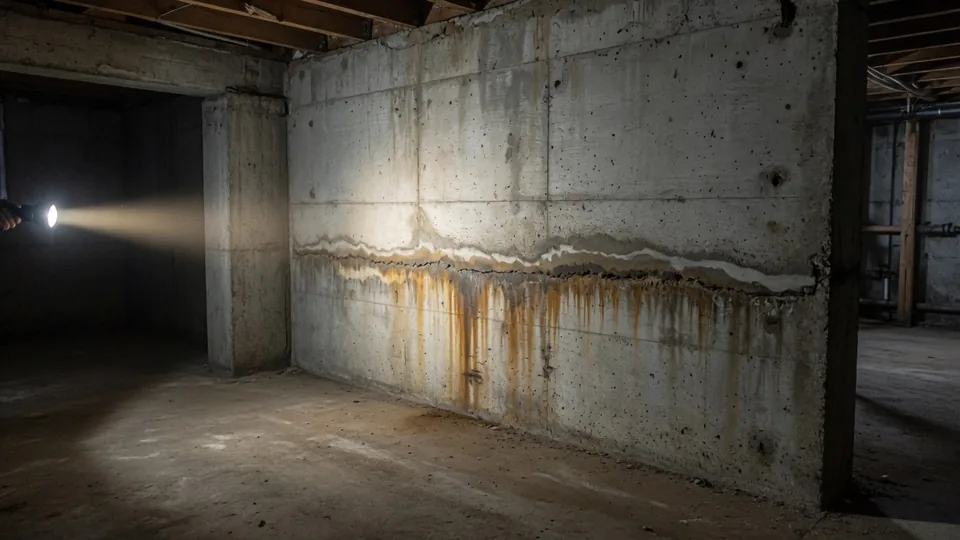
Here’s the deal. A sump pump is a small machine sitting in a hole in the floor. When water shows up, it throws that water outside. That’s the whole job. Most people only think about it when the carpet is wet or the float switch is screaming at 2 a.m.
This piece is for the homeowner who already suspects water is finding the low point of the slab — or who has a pump and wonders if the cheap swap from the big-box store is enough. Just what holds up when the power dies mid-storm.
What the pump is actually doing
Water under or against the foundation looks for the lowest indoor path. In a lot of older basements, that path is the slab edge, a cold joint, or a finished floor that never should have been put down wet. An interior drain (if you have one) walks that water to a pit. The pump lifts it and pushes it out a discharge line.
If you don’t have a drain system, the pit still only helps if water naturally collects there. A pump in the wrong corner of a dry slab does nothing useful. Location beats brand stickers.
When you need one — and when the problem is still outside
You probably need a working pump setup if:
- Water pools at a consistent low spot after heavy rain
- You’ve got an interior perimeter drain that ends in a pit
- The basement has a history of seepage and you’re finishing the space
- An old pump is dead, undersized, or short-cycling itself to death
You might need yard and grading work first (or also) if downspouts dump at the foundation, the lot slopes toward the house, or standing water sits against the wall after every storm.
A sump is not a magic wand for a gutter problem. Fix the outside when the outside is the story. Use the pump for water that still shows up at the slab.
Primary pump vs battery backup
Straight answer: in a climate where storms and outages travel together, primary-only is a gamble.
The primary pump runs on house power. The worst basement nights are the ones where the utility fails while the ground is saturated. That’s when a battery backup earns its keep — not because a salesperson said so, but because the physics of a blackout don’t care that you bought a “good” pump last spring.
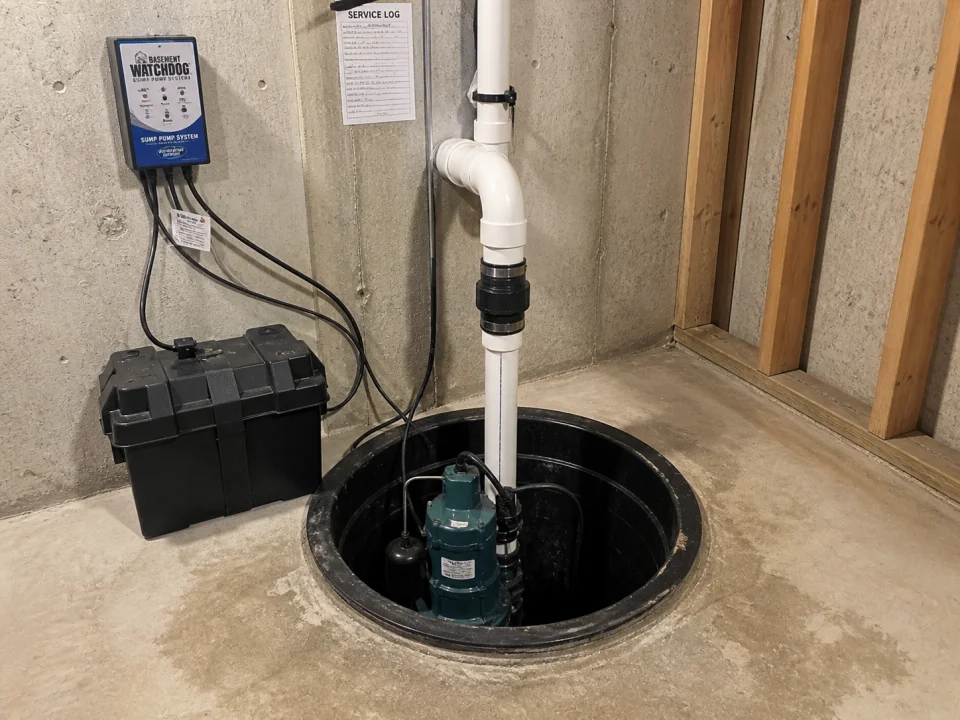
Two setups exist: a separate backup pump beside the primary with its own float, and a battery that powers the primary when the grid drops. The separate pump is the more resilient design — it also covers a primary that fails mechanically, not just electrically. Real runtime depends on how often the pump cycles, not the number on the box: a battery that lasts two days in a drizzle can be done in hours during a saturated-ground storm. Batteries age — replace them on the manufacturer’s schedule, not when they fail. A high-water alarm is cheap insurance either way. Water-powered backups exist where municipal pressure and local rules allow them, and a generator adds another resilience layer on top of — not instead of — a correctly sized system.
Backup doesn’t replace a correctly sized primary. It covers the hours when the primary can’t run.
Discharge lines and the January failure mode
Plenty of systems “work great” from April through November and then fail in a freeze.
Water has to leave the house through a discharge line. That line should:
- Get far enough from the foundation that you’re not watering the wall you just dried — how far depends on grade, the outlet, and what your town allows
- End in a place your town permits (do not assume the laundry sink or the sanitary sewer is legal)
- Survive cold weather — freeze-protected pop-ups and routing matter here
If the discharge freezes or gets buried and crushed, the pump runs, pressure builds, and something gives — check valve, coupling, or a wet floor. The boring outdoor piece of the job is half the reliability story.
Pit, check valve, short-cycling
Three unglamorous parts decide whether you hate this system:
The basin. A properly sized liner set in gravel, tied into drain tile when tile exists. Too small a basin, wrong gravel, wrong float height — the float chatters and the pump dies early.
The check valve. Sits on the discharge line, placed per the pump and valve manufacturer’s instructions. Without it, water falls back into the pit when the pump stops. The float rises again. The pump starts again. That’s short-cycling. It sounds like a nervous machine and it kills equipment.
The test. Pour water until the float trips. Watch it pump out. Confirm the check valve holds. Then test the backup the way the manufacturer says. If nobody tests, you own a rumor, not a system.
What a clean install day looks like
For a new pit: cut the slab at the low point, dig, set the basin in gravel, place the pump, run discharge with a check valve, add backup if you’re doing this right, patch the slab, test. Straightforward jobs land in a half day to a couple of days. Tying into a full interior drain system stretches that.
Like-for-like swap in an existing good pit is a shorter visit. New basin, new discharge path, new electrical — different animal. That’s pro territory for most homeowners.
Permits, short and honest: in New Jersey, a new sump and discharge where none existed requires a permit; like-for-like replacement of an existing pump generally does not. Cutting the slab in a house with a radon system can change the paperwork, and new electrical work may need its own filing. Your town’s construction office is the authority for the job address — don’t take a blog’s always/never as law.
What moves the cost
Slab access, how far the discharge has to run, freeze protection, electrical work, whether you’re opening the floor for a new pit, and whether this ties into a bigger drain project. A quality battery backup adds to the number — and a cheap pump-only swap looks cheaper on the receipt and expensive on the first outage.
Ask for a written scope that names the pump, the basin, the discharge route, and the backup runtime. Patterns vary; the site decides.
How this connects to drains and waterproofing
A sump is one node. Interior drains collect. Exterior work and grading reduce load. Waterproofing is a system word people use for three different jobs. If someone only sells you a pump and never looks at where water is coming from, you’re buying a bucket with a motor.
If the basement is a repeated problem — or finished materials have already been hit, which is water damage restoration territory — sort collection, discharge, and outside contributors together. The pump is necessary machinery in a lot of houses. It is not the whole diagnosis.
If you’re deciding this week
Walk the basement after the next hard rain. Note where water appears. Listen to the existing pump if you have one — constant short runs are a clue. Look outside at downspouts and grade. Then decide whether you need a pit, a better discharge, a backup, or a bigger water plan.
When you want hands on the actual floor, start from the sump pump installation page and ask for a look that includes the discharge path and backup — not just a pump model number.