
Straight answer: most water heaters fail on a schedule you can plan — or they fail as a flood. In Bergen County basements and utility closets (split-levels in Paramus, Teaneck, Dumont, Ridgewood; denser cores like Hackensack), a leaking tank can soak finished lower levels, mechanicals, and belongings before anyone notices. Replacing before catastrophe is cheaper than water damage restoration after.
This guide covers when to replace, tank vs tankless, gas vs electric, cost drivers, permits, and install details that separate a code-aware job from a “swap the cylinder and hope” job. It supports the service hub at water heater replacement (on the live site; not a separate row on the v3 content calendar).
Signs it is time to replace (not just flush)
- Age: many conventional tanks are in the 8–12+ year conversation; performance and leak risk rise with age (check the rating plate and manufacturer guidance)
- Rust-colored water or metallic taste that points to the heater, not the street main
- Rumbling / popping from heavy sediment (flushing helps some units; chronic noise on an old tank is a clue)
- Leaks at the tank body — not a loose fitting you can snug; tank shell leaks mean replacement, not a patch
- Insufficient hot water after elements/thermostats were already checked
- Piloted expansion tank, T&P (temperature and pressure) relief issues, or code gaps discovered during other work
If water is already on the floor, stop the supply if safe, keep electricity/gas hazards in mind, document, and treat it as a water-loss event when materials are wet.
Tank vs tankless (honest trade-offs)
Conventional tank
Pros: familiar, lower equipment cost, straightforward for many basements.
Cons: standby heat loss, finite recovery, footprint, flood volume if the tank fails.
Sizing is about first-hour rating and household demand (showers, laundry, dishwasher overlap) — not only “40 vs 50 gallon” labels without usage context.
Tankless (on-demand)
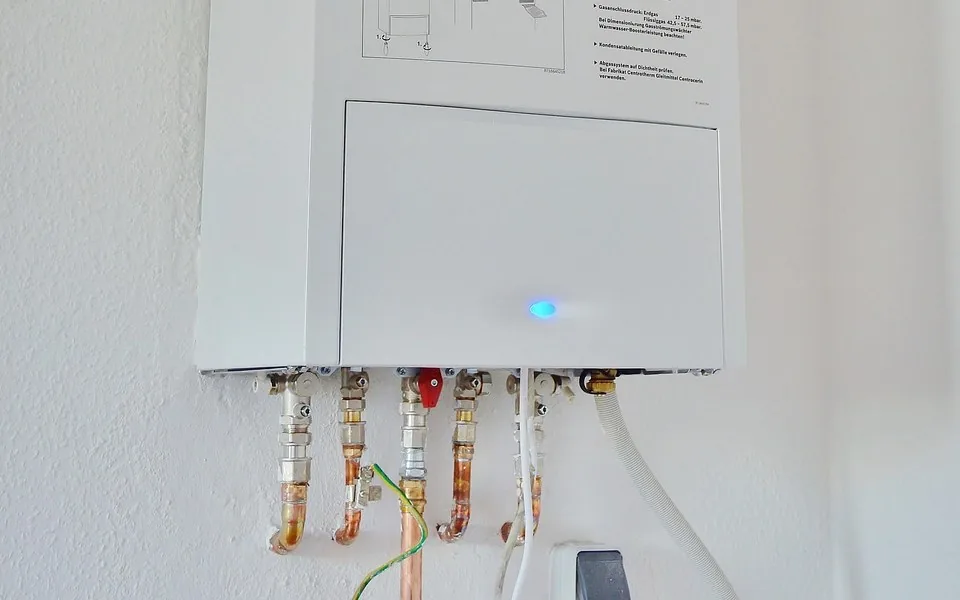
Pros: continuous hot water when sized and gas/electric capacity allow; smaller wall
footprint; no 40–50 gallons waiting to spill.
Cons: higher equipment and install complexity; venting or electrical service
upgrades; hard-water scaling if untreated; simultaneous high demand needs correct
sizing (or multiple units).
Tankless is not automatically “better.” It is better when the house systems and usage match it — and when the installer designs gas line, vent, condensate, and electrical correctly.
Hybrid / heat-pump tanks
Efficient in the right space (need room air and clearance). Basements can work; cold garages and tiny closets may not. Noise and condensate drainage are real design points.
Gas vs electric
Gas needs proper venting (or power-vent / direct-vent design), combustion air, and gas line capacity — licensed plumbing/gas work. Electric needs adequate circuit capacity and panel space; tankless electric can demand serious amperage.
Do not invent amp ratings or gas sizes in marketing copy — the unit listing and the Authority Having Jurisdiction (AHJ — your local building department) govern the install. A walk-through should name whether the existing service supports the product you want.
What a proper replacement includes (not just “new tank”)
- Safe isolation of power/gas and water
- Drain and remove the old unit; dispose per local rules
- Inspect pan, drain, valves, and nearby piping
- Set the new unit level; seismic/strap where required by code/product
- New flexible connectors or proper hard pipe as specified
- T&P relief valve piped to a safe discharge path — never capped
- Expansion tank where closed systems and code/practice call for it (common with backflow/pressure-reducing setups)
- Thermostat set to a safe household temperature (scald risk vs bacteria balance — follow current guidance; many homes use around 120°F as a common target, confirm for your household)
- Leak check, combustion/vent check for gas, electrical check for electric
- Homeowner walkthrough: shutoffs, breaker/gas valve, maintenance
Skipping expansion control or T&P discharge is how “simple swaps” create code and safety problems.
Cost drivers (ranges, always site-specific)
Broad U.S. pattern talk (~2026) — not a phone quote:
- Like-for-like tank replacement in an easy basement location: commonly lands in the low-to-mid thousands installed, depending on unit tier and parts
- Upgrades (larger tank, power-vent, better efficiency): step up
- Tankless conversions: a typical package sits higher — often mid thousands and up — once venting, gas line, electrical, and water treatment are real
What moves the number: fuel type change, relocating the unit, pan and drain work, permit fees (where required), difficult access, water treatment for tankless, and same-day emergency scheduling after a flood.
Bergen Restoration coordinates licensed plumbing for tank and tankless replacements — price from the site and the unit, not a national average meme.
Permits and inspections
Replacement work varies by municipality and by scope. Many towns require a plumbing permit for water heater replacement; gas and electrical changes add paths. Confirm AHJ for the job address. Do not invent a single “Bergen never needs a permit” rule.
Bergen basements and leak risk
Utility areas sit under living space or next to finished rec rooms. A failed tank can feed the same cold-joint and slab edges that already stress mid-century foundations. If you are finishing a basement (basement renovation), replace an aging heater before new flooring and drywall. If seepage is a separate issue, do not confuse a heater leak with foundation water — diagnose both (basement waterproofing).
Maintenance that extends life (and still is not forever)
- Annual flush on tanks where sediment is an issue (follow manufacturer)
- Anode rod inspection/replacement on many tank designs
- Expansion tank charge checks
- T&P test only if you know the safe procedure — or have a pro do it
- For tankless: descaling on the interval water hardness demands
Maintenance delays replacement; it does not make a 15-year tank young again.
Red flags
- No expansion tank discussion on a closed system
- T&P piped nowhere or capped
- “We will use the old flex lines” as default
- Tankless sold without gas/electrical capacity check
- No permit conversation where your town requires one
- Lowest bid that is equipment-only with no disposal, pan, or valves