
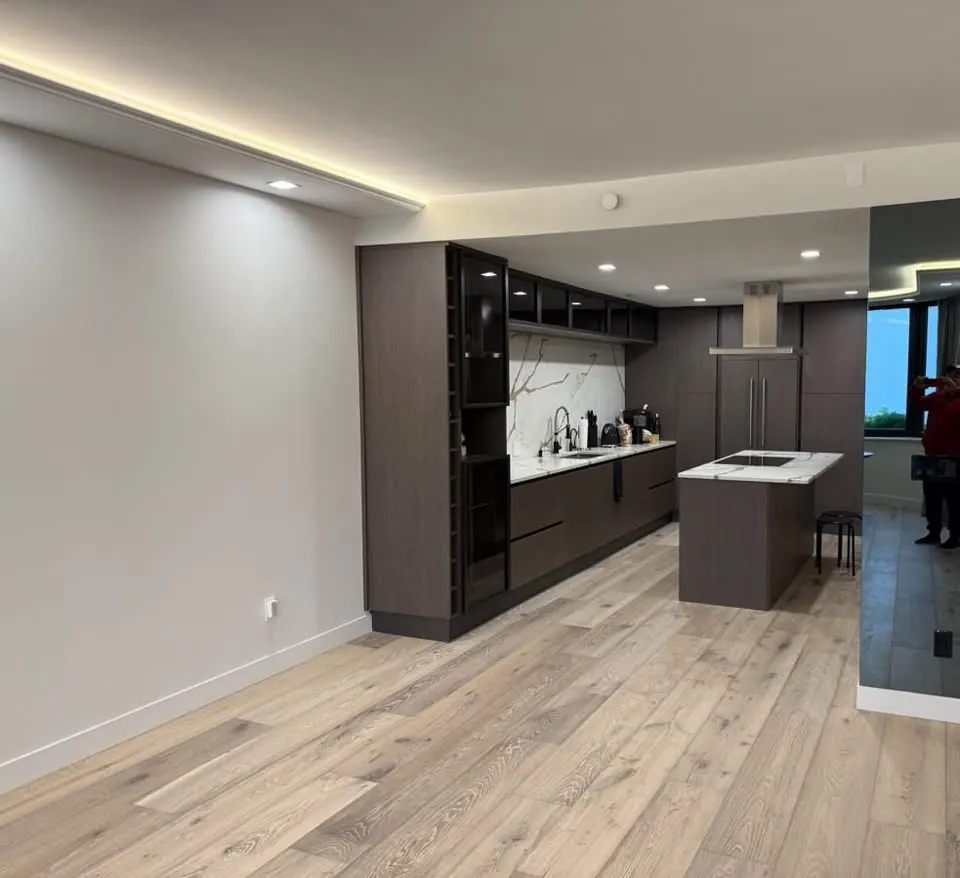
Kitchen Layout Changes
Wall removal, structural beams, island additions, plumbing and gas re-routing, and traffic-flow improvements — layout-change projects that solve real kitchen problems instead of just refreshing finishes.
Real Layout Changes Solve Real Problems
Sometimes a kitchen needs new cabinets and counters. Sometimes it needs a wall removed, the sink moved, an island added, or the cooktop re-routed for better flow. Layout changes are the highest-ROI move when the existing layout fights how your household actually cooks and gathers.
- Load-bearing wall removal with structural beams
- Island additions and peninsula reconfiguration
- Sink, dishwasher, and range relocation
- Plumbing and gas line re-routing
- Window and door opening modifications
- Improved traffic flow and work-triangle planning
Serving homeowners throughout all 70 Bergen County municipalities. View our Bergen County service areas.
Kitchen Layout Change Guides
Wall-removal, plumbing, and gas-line moves behind a real kitchen re-layout.
Wall Removal & Structural
- A load-bearing determination comes first — joist direction, what sits above, and the load path to the foundation, read before any sledgehammer plan.
- Beam sizing and column placement are engineered, and flush-beam options keep the opened ceiling clean where headroom matters.
- For structural changes that require permits, we coordinate engineering documents and inspections with your town.
- Flush-beam framing keeps the opened ceiling plane clean where headroom and sightlines matter most.
- Temporary shoring carries the load safely while the new beam goes in — the invisible half of wall removal done right.
Planning a project like this? Get an estimate.
Sink & Plumbing Relocation
- Moving the sink wall means rethinking vent stack, drain slope, and supply — not just a longer hose kit.
- Island sinks need underfloor routing planned before the floor is finished; late island sinks force expensive tear-outs.
- Licensed plumbers sequence rough-in with cabinet layout so the sink lands where the drawing says.
- Drain slope is the constraint that decides how far a sink can travel — supply lines follow easily; waste lines rule the plan.
- Venting is re-engineered with the move; a relocated sink without proper venting gurgles its way to a callback.
Planning a project like this? Get an estimate.
Range & Gas Line Changes
- Range moves need gas extension, shutoff access, and range-hood ducting to outdoors — recirculating hoods are a different, weaker choice.
- BTU load and pipe size are recalculated when the range upgrades with the move.
- Licensed gas trades permit and test; hood makeup air is planned where code requires it.
- Gas line re-routing and sizing runs through licensed trades with permits and pressure testing where required.
- Range relocation drags the ventilation plan with it — duct runs to the exterior get shorter or longer with every layout option.
Planning a project like this? Get an estimate.
Circuit Re-Routing
- New runs, island circuits, and lighting reconfiguration are mapped to the cabinet plan and panel schedule.
- Dedicated appliance circuits prevent shared-breaker trips when the microwave and toaster hit the same leg.
- Licensed electricians handle panel work and inspections; we leave chases open until rough-in passes.
- Modern kitchen code wants dedicated small-appliance circuits, GFCI/AFCI protection, and capacity old panels rarely have spare.
- Layout changes are the moment to land the panel work — circuits pulled through open walls cost a fraction of retrofit.
Planning a project like this? Get an estimate.
HVAC Adjustments
- Wall removals and cabinet blocks relocate registers and returns; we rebalance so the kitchen is not a dead air pocket.
- Range-hood makeup air is planned when exhaust volume demands it — sealed houses need the air to come from somewhere.
- Duct changes are coordinated with the layout drawings before finish ceilings close.
- Registers and returns get repositioned so the new island or seating zone isn't sitting in a draft or a dead spot.
- Range hood ducting is planned with the layout, not after — the straightest exterior run wins on noise and capture.
Planning a project like this? Get an estimate.
Cost & Timeline Guide
- Plumbing and structural moves set the $40k–$100k+ range more than new counters alone.
- Gas range relocation, load-bearing wall work, and floor patching after pipe moves are the classic mid-project adders.
- Permits for plumbing, electrical, and structural as required; 8–14 weeks including engineering when walls open.
- Structural scope (beam size, span, engineering) sets the budget band before finishes enter the conversation.
- Rough-in inspections sequence the timeline; layout-change kitchens run weeks longer than same-footprint remodels and are worth it.
Planning a project like this? Get an estimate.
Your Kitchen Layout Change Process
Consultation
We walk the existing kitchen, identify what is and is not working, review structural feasibility (load-bearing walls, beam options), and confirm where plumbing, gas, and electrical can move.
Scope & materials
We finalize the new layout with structural engineering where required, materials, electrical and plumbing routing, beam and header specs, and inspection scheduling.
Build
Crew executes demolition, structural work, rough-in, finish, and inspections with engineer sign-off where required.
Final walkthrough
Final walkthrough, structural inspection clearance, punch-list closeout, and project sign-off.
Frequently Asked Questions
For 2026, simple layout changes (new island, sink relocation) added to a remodel run $8,000-$25,000 over the base remodel cost. Wall removal with structural beams runs $15,000-$45,000+ depending on span, load, and beam type. Pricing and timelines are planning ranges.
Most walls can be removed with proper engineering. Load-bearing walls require a properly sized beam (LVL, steel, or flitch), permits, and structural sign-off. Non-load-bearing walls are simpler. We confirm with a structural engineer before quoting wall removal.
Yes for almost any layout change. Wall removal, plumbing relocation, gas re-routing, and new electrical circuits all require permits in Bergen County. We coordinate permit filings and inspection scheduling with your town where required.
Adding a layout change typically extends a remodel by 1-3 weeks depending on structural complexity, engineering review, and inspection scheduling.
Yes. Bergen Restoration is a registered New Jersey Home Improvement Contractor (NJHIC# 13VH08865500) with commercial general liability and workers' compensation coverage. Documentation is available on request, and homeowners should verify credentials before hiring any contractor.
Framing direction, what sits above, and where loads land — verified in the basement and attic, not guessed from the drywall. Load-bearing means a beam and engineering, not a dead end.
Drain routing with proper slope and venting, supply relocation, and floor repair along the path — the run's complexity, not its distance, sets the effort.
Yes with planning: a rated hood solution, power, and sometimes gas rerouted under the floor. Island cooking is a systems decision dressed as a style one.
The old wall's footprint leaves a gap — we weave matching hardwood, or the new layout gets new flooring throughout. Budget one or the other; ignoring it shows forever.
Usually — structural, electrical, and plumbing rough inspections before close-in. We sequence them so the schedule keeps moving instead of waiting on a missed slot.
No — some houses lose needed wall storage and gain noise. We'll say so when a widened opening beats a removed wall; the goal is your kitchen, not a trend.
Part of our Kitchen Remodeling service family — explore Condo & Apartment Kitchens, Full Kitchen Remodel, Cabinet Installation, Kitchen Rebuild, Luxury Kitchen Renovation, Open-Concept Kitchens, and Small Kitchen Remodeling.
Get Your Estimate
Reach us by phone or email and tell us about your kitchen layout change project. We will follow up with the next best step for your home.
Commercial general liability and workers’ compensation coverage. Documentation available on request.
Let's Talk About Your Project
Tell us what you have in mind — we'll follow up with a plan.