
Bathroom quotes confuse people for one reason: two bids for “the same bathroom” can describe completely different jobs. Before comparing numbers, you have to compare scopes — and in a bathroom, scope hides in places homeowners don’t think to look.
The scope question that sets everything
Do the fixtures stay where they are? A same-layout renovation — new tile, new vanity, new fixtures in the same positions — keeps plumbing work contained. Move the toilet, shift the shower, or split a tub into a shower-plus-freestanding-tub layout, and you’ve added drain routing, venting, and floor repair to the job. Moving the toilet costs more than upgrading everything around it.
Where the money actually goes
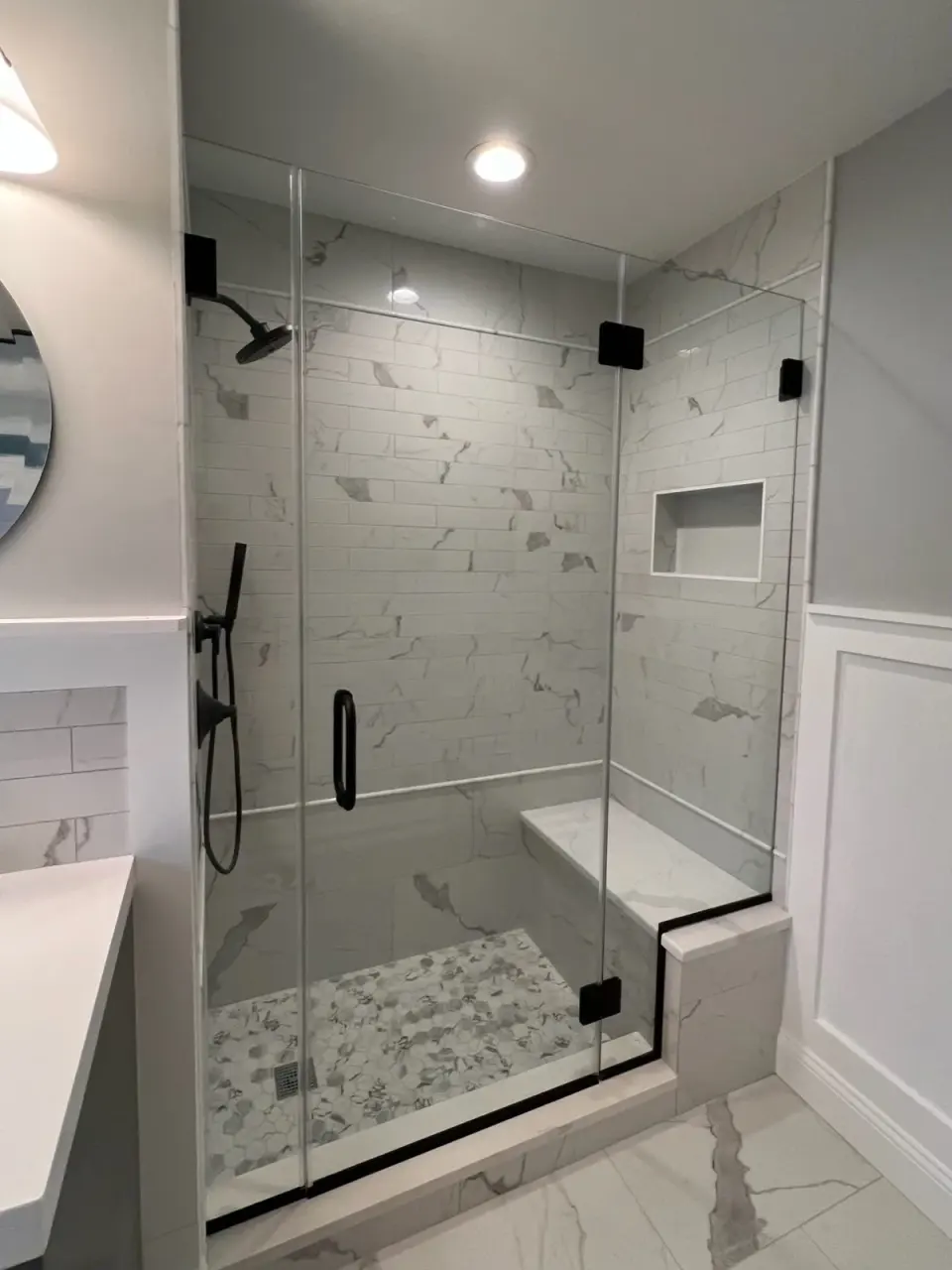
The shower is the project. Waterproofing system, pan construction, tile, glass, and valve work — the shower routinely carries the largest share of a bathroom budget, and it’s where corner-cutting fails first. A properly flood-tested pan behind beautiful tile is the difference between a renovation and a future demolition. Our walk-in shower page covers what a correct build includes.
Tile is labor, not just material. Large-format porcelain, niches, benches, and pattern work all move the labor line more than the tile price per square foot. Simple field tile set well beats intricate tile set badly, every time.
What’s behind the walls votes too. Bergen County’s mid-century baths hide mud-set tile beds, cast-iron stacks, and galvanized supply lines. None of it is a crisis — but a bid with contingency built in absorbs those discoveries; a bid without one converts them into change orders.
Ventilation protects the whole investment. An exterior-ducted fan is what keeps the new paint, tile, and vanity from living in a steam room. Plenty of older Bergen baths vent nowhere — or into the attic. Fixing that is part of the job, not an upsell.
Fixtures and vanity set the tier. Stock vanity and standard fixtures, semi-custom with quartz, or fully custom millwork — each tier moves the budget in steps. Decide the tier before bidding so every quote prices the same bathroom.
The conversions worth naming
A tub-to-shower conversion is its own scope — usually days of work, not weeks, when the layout holds. An aging-in-place bathroom adds blocking, curbless entry, and seating decisions that are cheap during a renovation and expensive after one. Naming the project correctly gets you quotes that describe the same job.
How to compare two bathroom bids
- Same-layout or fixture moves — in their words?
- What waterproofing system, and is the pan flood-tested?
- Fan ducted to the exterior — yes or no?
- What tier of vanity, fixtures, and glass is priced?
- What’s excluded, and how is contingency handled when demo opens the walls?
A lump-sum “bathroom remodel” line isn’t a scope — it’s a placeholder. Written scopes that answer those five questions can actually be compared. When you’re ready for one, the bathroom renovation page is the starting point — realistic ranges live there and in a written estimate after an on-site visit, not in a blog post’s guess.
Hidden line items that blow up bathroom budgets
Subfloor soft spots, out-of-level floors, and old galvanized or failed drain lines often appear only after demo. A honest bid either carries contingency language or a clear process for change orders when those show up. Tile that requires extensive substrate prep is not the same price as tile on a flat, solid floor.
Glass, niches, benches, and linear drains are finish choices with waterproofing consequences. Each adds labor and detailing time. Ventilation that is undersized or dumped into an attic will cost you later in mold and peeling paint even if the vanity photo looks perfect on day one.
For Bergen County homes, also plan for access, parking, and shared walls with other rooms. A first-floor powder room is a different logistics problem than a second-floor primary bath with only a hallway for staging. Our bathroom renovation page walks through how we turn those variables into a written scope before demolition starts.