
Masonry is the part of the house nobody thinks about until water is coming through a ceiling or a brick lands on the patio. Chimneys, brick veneer, stone facing, steps, and retaining walls all sit outside taking the full brunt of Bergen County weather, and they fail slowly enough that most homeowners miss it — right up until the repoint they could have done for a few thousand dollars has turned into a rebuild.
This is the plain-English version of how brick, stone, and chimney masonry actually wears out in Bergen County, NJ, and what to do about it. The point of it is simple: to help you tell the cheap fix from the expensive one before the choice gets made for you. We'll also be straight about where the line sits between the masonry we do ourselves and the things we coordinate with other licensed trades — because a good masonry contractor knows exactly where their scope ends.
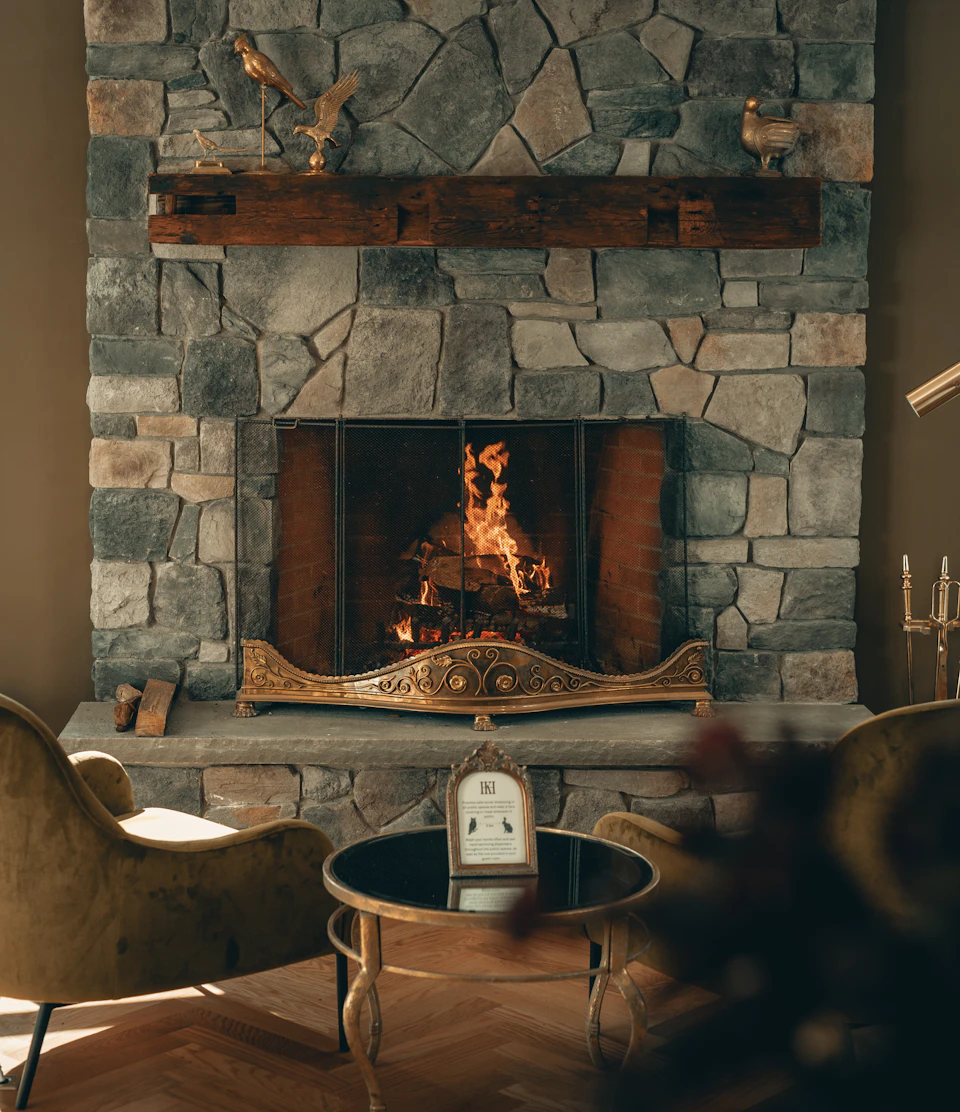
Why Bergen County winters wreck masonry
Brick and mortar look permanent, but they're porous — they drink water. In a climate with a real winter, that's the whole problem. Water soaks into the face of a brick and into every hairline gap in the mortar joints, then the temperature drops below freezing overnight and that water turns to ice. Ice takes up about nine percent more room than water, so it pushes outward with real force from inside the masonry. Come morning it thaws, the water works a little deeper, and the next night it freezes again. That is the freeze-thaw cycle, and Bergen County hands masonry dozens of them every winter. A lot of Bergen's brick and stone housing stock predates the war, and older soft brick laid in lime mortar gives up its face faster than modern hard-fired brick does.
Each cycle is tiny. Stacked across years, they're what crumbles a mortar joint, blows the face off a brick, cracks a chimney crown, and heaves a set of front steps out of level. Nothing about it is dramatic on any given night — which is exactly why it sneaks up on people. The damage compounds quietly until a joint is open enough, or a crown is cracked enough, that water stops being slowed at all and starts pouring into the wall or the chimney behind it. From there it accelerates fast.
The defense is not some miracle sealer. It's keeping water out of the masonry in the first place — sound mortar joints, an intact chimney crown and cap, working flashing, and a breathable water repellent that sheds rain while still letting the wall dry. Get water managed and freeze-thaw has nothing to grab. Let water in and no amount of anything else keeps up.
Reading the warning signs before they turn structural
Masonry almost always tells you it's in trouble at the surface long before the structure is at risk. Learning to read a few signs is the difference between catching a repoint and paying for a rebuild.
Crumbling or receding mortar joints. Run a key or a screwdriver along a joint. If mortar flakes out, feels sandy, or has receded so the joints look recessed and shadowed, the mortar is past its service life. Mortar is meant to be the sacrificial layer — it's supposed to wear before the brick does — and once it's open, water has a highway into the wall. This is the classic repoint-now signal.
Spalling brick. When brick faces flake, crack, or pop off entirely — leaving a rough, crumbly pockmark where the smooth face used to be — that's spalling, and it's freeze-thaw damage caught in the act. A spalled brick can't be patched back to health; the water already got in and broke it. Affected units get cut out and replaced. Spalling is also a warning that water is getting into the surrounding masonry too, not just the one brick you can see.
White chalky efflorescence. That powdery white bloom on brick or stone isn't just a stain — it's salt left behind as water moves through the masonry and evaporates at the surface. Wipe it off and it comes back because the cause is water, not the powder. Efflorescence means moisture is actively traveling through the wall, so it's a prompt to find the source, not to scrub and forget.
A cracked or crumbling chimney crown, or a missing cap. The crown is the sloped concrete top of the chimney and the cap is the metal cover over the flue. When either fails, water goes straight down into the chimney from the top — the single most common way a chimney starts to rot from the inside.
Interior water stains near a chimney or masonry wall. A brown ring on a ceiling by the chimney, damp drywall along a masonry wall, or a musty smell after rain all mean water has already broken through. By the time it's showing inside, the outside has been letting water in for a while.
A leaning or bowing chimney, or stair-step cracks. These are the serious ones. A chimney visibly out of plumb, a bulge in a brick wall, or cracks that run in a stair-step pattern up through the mortar joints are structural signals — not cosmetic — and they call for an assessment before anything else.
Repoint, repair, or rebuild — and why repointing buys decades
Most masonry decisions land in one of three buckets, and matching the fix to how deep the failure runs is the whole game. Over-fixing wastes money; under-fixing means doing it again in two years.
Repointing (also called tuckpointing) is the workhorse repair, and it's the right call when the mortar joints are failing but the brick and stone themselves are still sound. The old, deteriorated mortar is ground out of the joints to a consistent depth and repacked with fresh mortar matched to the original in color and joint profile, so the repair reads as part of the wall rather than a patch. Done properly and paired with a breathable water repellent, repointing stops water at the joints and can hold the wall for twenty or thirty years — at a fraction of what a rebuild costs. It's the highest-value masonry work there is, which is exactly why catching failing joints early matters so much.
Targeted repair covers the case where one specific thing has let water in: a cracked crown, a handful of spalled bricks, failed flashing at the roofline, or a wobbling cap. Here the move is to rebuild the failed piece, fix whatever let the water in, and leave the rest of the sound structure alone. You're not rebuilding a healthy chimney because one component gave out.
Rebuilding is the honest answer when repointing would just be chasing a problem that's already outrun it — a leaning chimney, spalling and crumbling below the roofline, or masonry deteriorating faster than spot repairs can keep up. Rebuilding from the last sound course up, or from the footing when it's that far gone, resets the structure and lets the top of the chimney be detailed correctly on the way back up. It costs more, but repointing over a structure that needs a rebuild is money spent twice. The masonry and chimney repair work we do runs across all three — and which one your project needs is settled by looking at it, not by guessing.
Chimney anatomy: what fails first
A chimney isn't one thing; it's a stack of parts that each have one job, mostly keeping water out. When you know the parts, a leak or a rot problem stops being mysterious. From the top down:
- Crown. The sloped concrete slab across the top of the chimney, designed to shed rain away from the flue and brick. Crowns crack from freeze-thaw and settling, and a cracked crown is the most common chimney failure point — it dumps water straight into the masonry below it.
- Cap. The metal cover over the flue opening. It keeps rain, animals, and debris out of the flue. A missing or rusted-out cap lets water and critters straight down the chimney.
- Flashing. The metal that seals the joint where the chimney passes through the roof. Failed or poorly done flashing is one of the most frequent sources of ceiling leaks near a chimney — and it's often blamed on the roof when it's really the flashing.
- Flue liner. The channel inside that safely vents smoke and combustion gases. Liner condition and relining are a safety matter tied to how the chimney vents, which is why that side of the work belongs with a licensed chimney professional rather than a mason.
- Brick and mortar stack. The visible masonry body of the chimney, which takes the same freeze-thaw beating as the rest and gets repointed or rebuilt where it's failing — especially above the roofline, where it's most exposed.
Read top to bottom, the pattern is clear: water almost always starts winning at the crown, cap, or flashing, then works down into the stack. Fix the top-of-chimney water entry early and the expensive masonry below it lasts far longer.
The honest split: what we do, and what we coordinate
A masonry contractor who's straight with you tells you where their scope ends. Here's ours, plainly.
We do the masonry: brick and stone repair and replacement, tuckpointing and repointing, chimney crown, cap, flashing, and rebuild work, firebox and hearth masonry, masonry waterproofing, and ground-level masonry like steps, stoops, walkways, patios, and retaining walls. If it's brick, block, stone, or mortar, it's our work.
Now the parts we don't do ourselves, and won't pretend to. Chimney sweeping and inspection: we don't sweep flues or perform Level 2 chimney inspections. For cleaning, flue and venting safety, and inspections, we coordinate with a licensed chimney professional so the fireplace is confirmed safe to use — before and after our masonry. Gas fireplaces: we rebuild firebox, hearth, and surround masonry, but we do not perform gas line or appliance connections ourselves; for gas fireplace and insert connections we coordinate with licensed gas professionals where required. Mold: where a long-standing masonry leak has led to mold, that's remediation work we coordinate with the appropriate licensed specialists, not something a masonry crew should improvise.
None of that is a hedge — it's how the job gets done right. Masonry, flue safety, and gas are three different licensed disciplines, and a firm that claims to do all of them casually is telling you something. We keep the masonry ours and bring in the right hands for the rest.
The leaning chimney: when it's a rebuild
A chimney that's visibly leaning, pulling away from the house, or standing out of plumb is not a repoint job and shouldn't be treated like one. Lean usually comes from one of a few things: a failed or undersized footing, years of freeze-thaw eating the mortar until the stack lost its integrity, or water that got in and rotted the masonry from the inside until it could no longer hold itself square.
The reason it matters beyond looks is weight and gravity. A masonry chimney is heavy, and a leaning one is a structure that has already started to move — patching a few joints on the outside does nothing about why it's tipping. The durable fix is almost always a partial or full rebuild: take it down to the last sound course (or to the footing if the base is the problem), correct whatever caused the lean, and rebuild it plumb and re-detail the top-of-chimney waterproofing on the way up. A leaning chimney is one of the clearest cases where trying to save money with a repoint costs more in the end.
Permits and who signs off
How much paperwork masonry work involves depends entirely on scope, and it varies by municipality — Bergen County's 70 towns each run their own building department, and the office at your property's address is the one whose answer counts. Repointing and cosmetic repair usually need no permit. Structural work is a different story: chimney rebuilds typically require a permit, and many towns require a permit and engineering for retaining walls above roughly four feet. A number of Bergen County municipalities also have historic districts that restrict which materials and mortars you can use, which is worth confirming before any work starts if your home is in one.
For projects that require permits, we coordinate permit paperwork, trade documentation, and inspection scheduling with your town and licensed professionals where required, and permitted structural work gets a final inspection to close it out. Fireplace and flue safety sign-off is coordinated with a licensed inspector where required. The point isn't to make masonry sound bureaucratic — it's that when the work is structural, doing it under permit is what protects you when you sell the house or file a claim.
What actually drives masonry cost
There's no sticker price for masonry, and any number quoted over the phone without seeing the wall is a guess. What we can be straight about is the levers that move the number, and rough 2026 Bergen County planning ranges so you can tell a small repair from a real project. These are planning ranges, not quotes — the actual figure comes from looking at the work.
- Spot brick or joint repair: about $400–$1,200, and usually 1–2 days on site.
- Section tuckpointing / repointing: roughly $1,200–$4,000, around 2–4 days.
- Chimney crown, cap & flashing package: about $1,500–$4,500, typically 2–4 days.
- Partial chimney rebuild (above the roofline): roughly $2,500–$6,000.
- Full chimney rebuild: about $6,000–$15,000 and up, usually 1–2 weeks depending on height and access.
- Steps, stoop, or retaining-wall rebuild: roughly $2,000–$9,000, often 3–7 days.
What pushes a given job within or beyond those ranges: how much masonry is actually failing (a repoint is far cheaper than a rebuild), height and access (a tall chimney needing staging or a lift costs more than a first-floor wall), whether structural work is involved, material matching (matching old brick, stone, and mortar profiles takes more care), and weather. Masonry needs dry, above-freezing conditions to cure, so cold snaps and rain push schedules — one reason spring and fall book up fastest.
Bergen Restoration is a registered NJ Home Improvement Contractor (NJHIC# 13VH08865500), carrying commercial general liability and workers' compensation coverage; documentation available on request. We handle brick, stone, and chimney masonry — from a few spalled bricks to a full rebuild — as part of keeping Bergen County homes weather-tight, and we coordinate flue safety, gas, and any other licensed trade the work touches across all 70 Bergen County municipalities.