
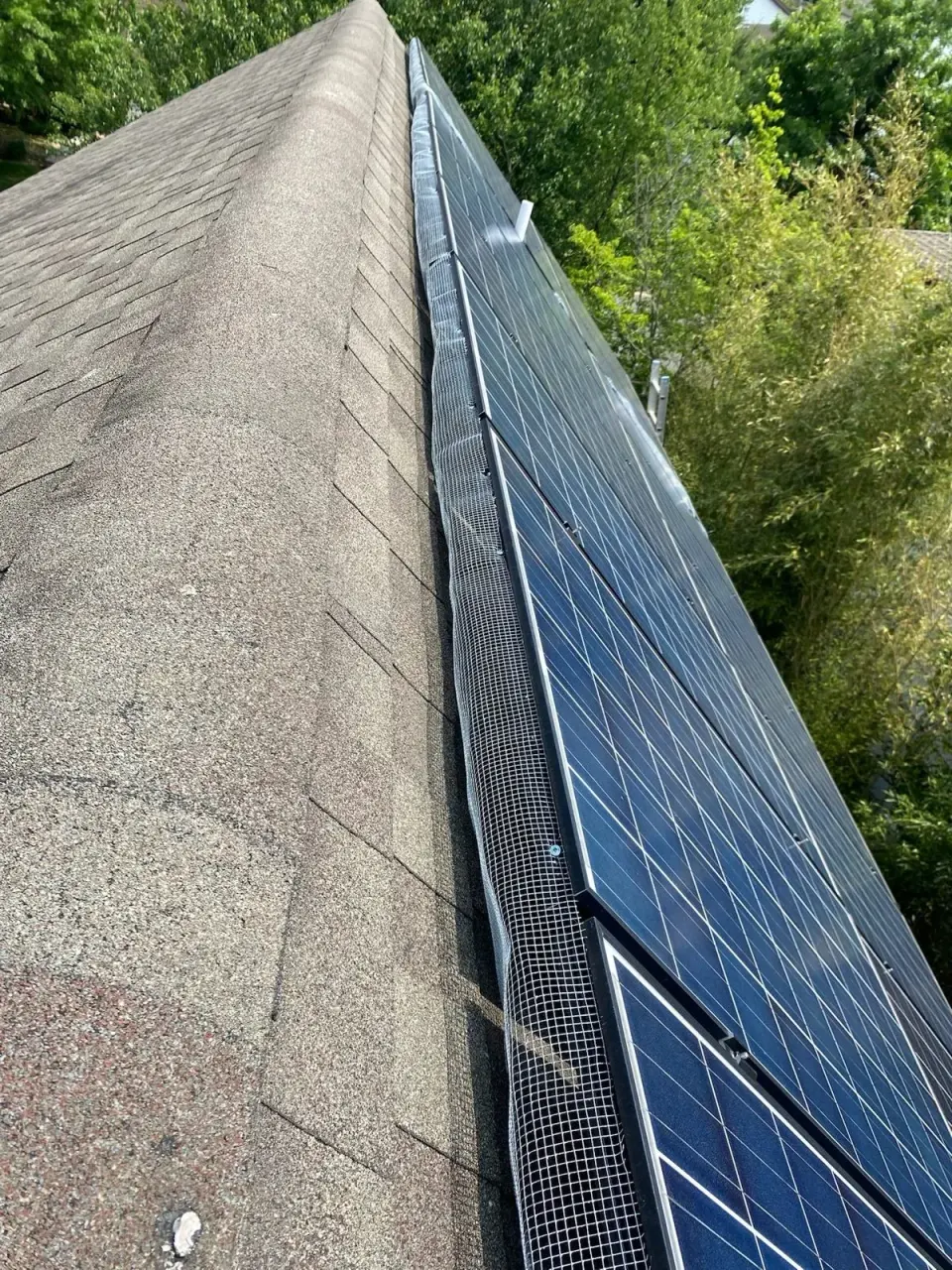
Roof Leak Repair
Bergen County roof leak diagnosis, emergency tarping, and permanent repair. Flashing failure, valley wear, penetration leaks, and storm damage — localized fixes that hold and honest assessment when the leak signals replacement.
Find the Leak. Fix It Right.
Roof leaks often appear far from their actual source — water travels along framing before showing on the ceiling. Diagnosis starts at the attic side (where access permits) and works outward to the most likely entry points: flashing, valleys, penetrations, and shingle damage. Once identified, the repair is sized to the cause: targeted patch for localized failure, or honest conversation about replacement when the leak signals end of roof service life.
- Active-leak emergency tarping to stop interior damage
- Attic-side leak source identification where access permits
- Roof-side inspection of flashing, valleys, penetrations, and shingle field
- Flashing replacement at chimneys, sidewalls, and skylights
- Valley repair or replacement when wear or storm damage is the cause
- Pipe-boot, vent-stack, and roof-penetration reseal or replacement
- Localized shingle replacement matched to existing color and product
- Interior ceiling damage documented for insurance coordination when applicable
- Honest assessment when leak pattern signals replacement rather than spot repair
Repair-vs-replace recommendations are based on roof age, leak pattern, and deck condition. We document the inspection with photos so the recommendation is verifiable.
Serving homeowners throughout all 70 Bergen County municipalities. View our Bergen County service areas.
Roof Leak Repair Guides
Decisions that determine whether the leak stays fixed.
Where Roof Leaks Actually Start
- Flashing points: chimneys, skylights, sidewalls, and plumbing boots account for most leaks — sealant and step flashing fail decades before shingles do.
- Valleys: concentrated water flow finds any lifted shingle, rusted valley metal, or debris dam first.
- Nail pops: backed-out nails lift shingles just enough for wind-driven rain to get under.
- Travel distance: water runs along rafters and decking before it drips — the ceiling stain can sit ten feet or more from the entry point.
- Attic reading: stains, rusted nail tips, and matted insulation map the true water path before anyone climbs onto the roof.
Planning a project like this? Get an estimate.
Ice Dams & Winter Leaks
- How they form: attic heat melts snow high on the roof; the melt refreezes over the cold eave overhang and dams everything behind it.
- Where they leak: backed-up water enters above the exterior wall line, staining ceilings and wall tops in late winter.
- The lasting fix: air-sealing the attic floor, insulation depth, and balanced ventilation — the roof surface is only half the story.
- Ice & water barrier: membrane at the eaves is standard on replacements here; many older roofs never got it, which is why they leak in February and pass inspection in June.
- Emergency vs permanent: clearing a dam stops today’s leak; the attic work is what stops next winter’s.
Planning a project like this? Get an estimate.
Repair or Replace the Roof
- One-spot rule: a single identifiable entry point on a roof under 15 years old is almost always a repair, not a replacement.
- Age: asphalt shingles past 20 years fail in new spots as fast as old ones get fixed — repairs stop being economical.
- Granule loss: bald patches and gutters full of granules mean the shingle field itself is done, wherever this leak happens to be.
- Repeat offenders: a third repair in two seasons usually costs more in interior damage than it saves on roofing.
- Match reality: discontinued shingle lines patch functionally but not invisibly — worth knowing before a visible slope gets a mismatched square.
Planning a project like this? Get an estimate.
What a Proper Repair Includes
- Deck check: soft or delaminated sheathing under the leak gets cut back to solid wood — shingling over rot buys months, not years.
- Underlayment: the felt or synthetic layer under the repair area is replaced, not reused, so the roof has a second line of defense.
- Flashing rework: step flashing and counterflashing near the repair are reset or replaced — resealing old metal is where cheap repairs fail.
- Sealant discipline: sealant backs up mechanical details; it never substitutes for them.
- Interior verification: the attic side is checked after the next rain, not assumed dry.
Planning a project like this? Get an estimate.
Storm Damage & Insurance Claims
- Covered events: wind-lifted shingles, hail strikes, and impact from falling limbs are the classic sudden-damage claims.
- Wear exclusions: leaks from aged, deteriorated, or poorly maintained roofing are typically excluded — insurers look closely at roof age.
- Document first: date-stamped photos of the damage, the debris, and the interior effects before any temporary repair strengthens the file.
- Temporary protection: reasonable emergency measures (tarping, dry-in) are usually expected by policies to prevent further damage — keep the receipts.
- Scope alignment: a written repair scope that maps each line to documented damage gives the adjuster something concrete to approve.
Planning a project like this? Get an estimate.
Cost & Timeline Guide
- Single-point repairs: minor work — a shingle section, a nail pop, one flashing detail — runs $350–$1,200 in 2026 ranges.
- Typical leak repair: $650–$2,500 depending on location, roof pitch, access, and how much flashing or decking is involved.
- Hidden-damage variable: wet sheathing or insulation found during the repair is line-itemed, not buried in the base price.
- Timeline: most leak repairs are diagnosed and completed within a day once materials match.
- Weather windows: shingle sealing needs dry conditions and workable temperatures; in winter, a temporary dry-in may bridge to the permanent repair.
Planning a project like this? Get an estimate.
Your Roof Leak Repair Process
Inspect & diagnose
Evaluate crack width, pattern, location, and whether water is present or seeping. Determine whether the crack is structural, cosmetic, or moisture-driven.
Select repair method
Recommend epoxy, polyurethane, carbon fiber reinforcement, or engineering coordination based on findings. We explain the options before anything is scheduled.
Prep & seal
Clean the crack, install injection ports where applicable, inject sealant, and apply surface seal. Carbon fiber straps installed where lateral pressure is a concern.
Waterproof & coordinate drainage
Apply waterproofing membrane over repaired sections. If water pressure from drainage is the root cause, coordinate French drain, sump pump, or yard drainage work.
Frequently Asked Questions
24/7 emergency intake; same-day or next-day response is typical when crews and site conditions allow. Exact timing depends on weather events, call volume, location, access, and crew availability.
In most cases, yes — when the roof has substantial life left and the leak is localized. We assess roof age, deck condition, and leak pattern before recommending repair vs replacement. Honest assessment matters more than the bigger sale.
For storm-event damage (wind, hail, ice dam, tree impact), homeowner insurance often covers repair. We document the damage with photos and coordinate with your adjuster. Wear-and-tear leaks are typically homeowner expense.
Most Bergen County municipalities do not require a permit for spot roof leak repair on residential properties. Larger repairs that involve replacing significant portions of the roof system may require permits — we confirm with your town before scheduling.
Yes. Bergen Restoration is a registered New Jersey Home Improvement Contractor (NJHIC# 13VH08865500) with commercial general liability and workers’ compensation coverage; documentation available on request.
Flashing at chimneys, walls, and valleys; pipe-boot gaskets; and nail pops — far more often than the field shingles. The stain on your ceiling is rarely under the entry point; water travels rafters first.
Snow melts over the warm attic, refreezes at the cold eave, and the pond backs up under shingles. The repair is flashing and membrane; the cure is attic insulation and ventilation — we address both.
Wind-driven-rain leaks are directional — we test with hose isolation and inspect from the attic side during the event window. Intermittent doesn't mean unfindable.
The underlayment and flashing detail beneath — matching shingles over a corrected detail. Shingle-only patches over failed flashing are why the same spot leaks twice.
Always — stains, daylight, wet insulation, and rusted nail tips map the real path. Ten minutes in the attic beats an hour of guessing on the roof.
Widespread granule loss, brittle shingles that crack underfoot, repairs stacking on repairs — the roof is telling you. We'll show you photos and say replacement before selling a patch that won't hold.
Part of our Roof Repair & Replacement, Bergen County NJ service family — explore Flat Roof Repair, and Roof Shingle Replacement.
Get Your Estimate
Tell us about your foundation crack or moisture concern. We’ll follow up with the next best step.
Commercial general liability and workers’ compensation coverage. Documentation available on request.
Let’s Talk About Your Project
Tell us what you have in mind — we’ll follow up with a plan.