
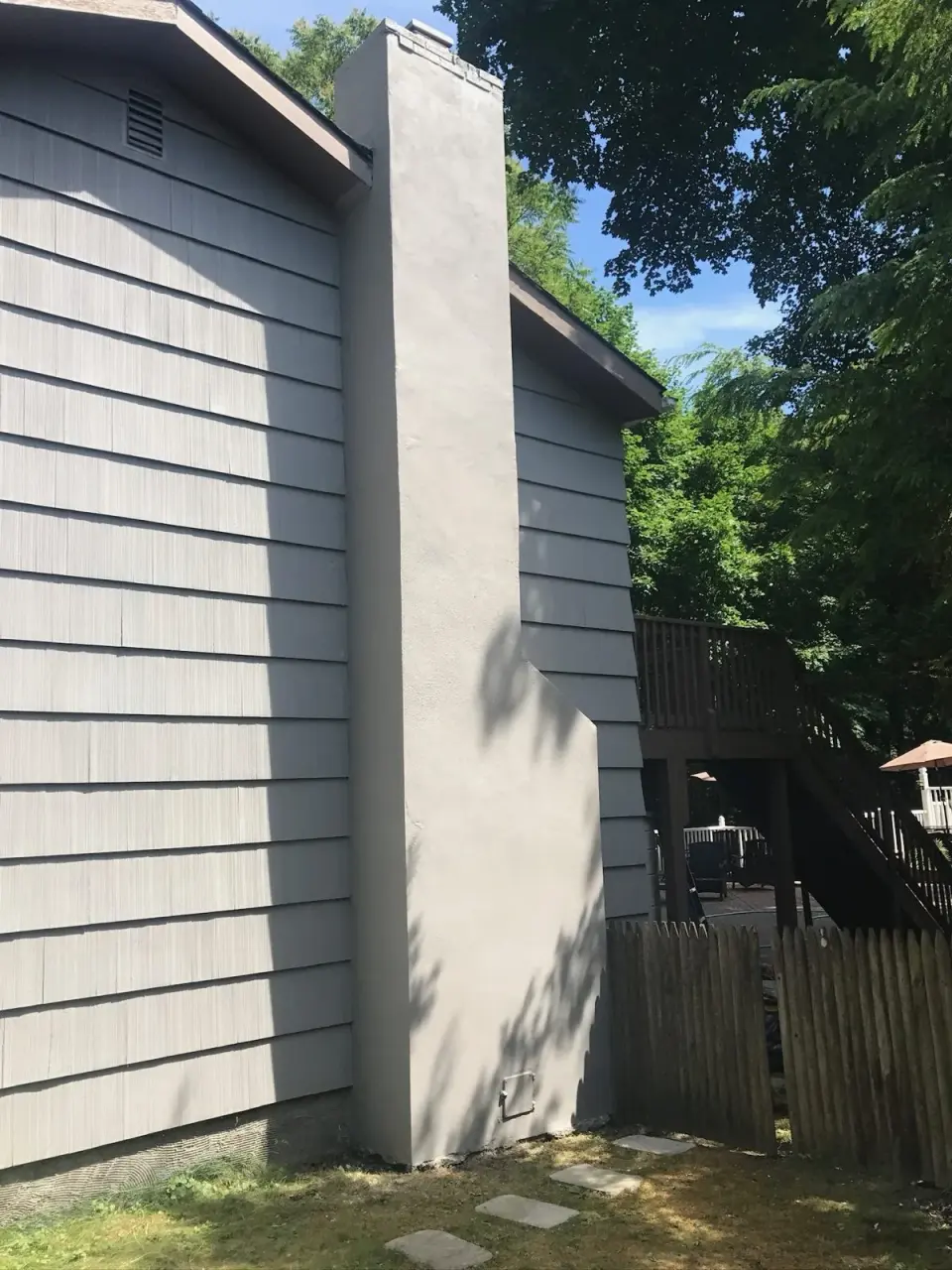
Vinyl Siding
Vinyl siding tear-off and full replacement for Bergen County homes. Sheathing inspection, house-wrap weather barrier, optional foam insulation, and manufacturer-aligned vinyl siding install — managed by a registered NJ contractor.
Vinyl Siding Tear-Off & Install
Vinyl siding is the most common Bergen County residential siding because it holds 25–40 years with minimal maintenance and accepts a wide range of colors and profiles. The install determines the lifespan more than the product line. Tear-off lets us inspect the sheathing, replace failed house-wrap, and address any rot before the new siding goes on. Skipping these steps is why some installations fail in 8 years instead of lasting 30.
- Full tear-off of existing siding and trim down to sheathing
- Sheathing inspection — rot, water damage, and fastener integrity
- Weather-resistive barrier (house-wrap) replacement across entire wall area
- Optional foam insulation board over sheathing for R-value upgrade
- J-channel, corner posts, and starter strip installed per manufacturer spec
- Vinyl siding installation with proper expansion gaps and nailing tolerance
- Window and door trim wrap with aluminum coil-stock or matching vinyl
- Soffit and fascia replacement coordination when needed
- Caulking at penetrations and trim transitions; cleanup with magnet sweep
Vinyl siding is installed by experienced exterior crews. Cedar, fiber cement, stucco, and metal siding systems use different installation methods and are coordinated through specialists.
Serving homeowners throughout all 70 Bergen County municipalities. View our Bergen County service areas.
Vinyl Siding Guides
Decisions that determine whether the siding lasts and looks right.
Gauge, Profile & What Quality Means
- Panel thickness: builder-grade runs around .040″; premium panels at .044–.046″ resist sagging, oil-canning, and hail cracking.
- Profile & lock: deeper profiles and stronger locking legs hold panels rigid and straight against wind and heat.
- Color technology: through-color panels with capstock UV layers fade evenly and slowly; cheap darks chalk in a few seasons.
- Wind rating: better lines carry 160+ mph rated systems when nailed to spec — relevant on open lots and gable ends.
- Sample test: hold the panel: stiffness, lock depth, and finish consistency tell you more than the brochure does.
Planning a project like this? Get an estimate.
What Goes Under the Vinyl
- House wrap: a continuous, properly lapped and taped weather barrier over the sheathing is the real water manager.
- Flashing integration: window and door openings get pan and head flashing lapped into the wrap — the detail that decides whether walls stay dry.
- Sheathing repair: soft OSB or plank sheathing found at tear-off is replaced before anything covers it.
- Foam board option: rigid insulation under the vinyl adds R-value and flattens wavy old walls in one step.
- Starter & trim: level starter strip and properly nailed corner posts set every course that follows.
Planning a project like this? Get an estimate.
Insulated Vinyl — Worth the Upgrade?
- Rigidity: the foam backing makes panels noticeably stiffer — straighter walls, fewer waves, better impact resistance.
- Thermal value: adds roughly R-2 to R-3 continuous insulation over the studs — modest but real, and it damps thermal bridging.
- Sound: the foam layer audibly quiets road and lawn-equipment noise through the wall.
- Where it earns it: older homes with minimal wall insulation and flat, visible elevations get the most from the upgrade.
- Where it doesn’t: well-insulated walls behind heavily broken-up elevations see less benefit — standard premium panel may serve better.
Planning a project like this? Get an estimate.
Why Some Vinyl Jobs Look Wavy
- Nail it loose: panels hang on nails centered in slots, snugged not pinned — nailed tight, the panel buckles the first hot week.
- Expansion gaps: quarter-inch clearance at posts and channels lets panels drift instead of bow.
- Straight substrate: vinyl telegraphs the wall behind it; furring or foam corrects old waviness before panels go on.
- Seam discipline: staggered, factory-lapped seams facing away from approach sightlines keep elevations calm.
- Temperature at install: panels cut and hung in extreme cold are sized for it, or summer reveals the mistake.
Planning a project like this? Get an estimate.
Siding Over Existing — When It’s Honest
- The case for tear-off: removal exposes sheathing rot, old leaks, and missing wrap — problems that overlay seals in.
- When overlay can work: sound, flat wood siding on a dry wall with furring to correct plane — and a homeowner who accepts the tradeoff.
- Thickness consequences: overlay pushes windows and trim deeper; jamb extensions and trim rework often erase the savings.
- Moisture risk: trapping a marginal wall behind new vinyl converts a visible problem into a hidden one.
- Our default: tear-off unless inspection genuinely clears the wall — and we tell you which case yours is.
Planning a project like this? Get an estimate.
Cost & Timeline Guide
- 2026 range: roughly $5–$10 per square foot installed — including tear-off, house wrap, standard trim, and cleanup.
- Line-itemed extras: insulation board, premium profiles, soffit and fascia work, and extensive trim wrap appear as separate estimate lines.
- What moves the number: house size and height, elevation complexity, panel tier, and how much rotten sheathing the tear-off reveals.
- Timeline: a typical single-family re-side runs 3–5 working days, weather permitting.
- Live-in friendly: work is exterior; the house stays fully usable throughout.
Planning a project like this? Get an estimate.
Your Vinyl Siding Process
Inspect & diagnose
Evaluate crack width, pattern, location, and whether water is present or seeping. Determine whether the crack is structural, cosmetic, or moisture-driven.
Select repair method
Recommend epoxy, polyurethane, carbon fiber reinforcement, or engineering coordination based on findings. We explain the options before anything is scheduled.
Prep & seal
Clean the crack, install injection ports where applicable, inject sealant, and apply surface seal. Carbon fiber straps installed where lateral pressure is a concern.
Waterproof & coordinate drainage
Apply waterproofing membrane over repaired sections. If water pressure from drainage is the root cause, coordinate French drain, sump pump, or yard drainage work.
Frequently Asked Questions
Quality vinyl siding installed correctly delivers 25–40 years of service in Bergen County climate. Color fading from UV may show before structural failure, especially on south- and west-facing walls. Manufacturer warranties on the product itself often run 30 years to lifetime, prorated.
Most Bergen County municipalities do not require a permit for like-for-like residential siding replacement. Some towns require permits if exterior insulation board is added or if substantial trim or sheathing work is involved. We confirm with your municipality before scheduling.
Most Bergen County 1,800–2,400 sq ft residential homes complete in 4–8 working days when weather cooperates. Larger homes, complex rooflines with multiple dormers, or homes requiring substantial sheathing repair extend the schedule.
Vinyl siding replacement runs roughly $5–$10 per square foot installed in 2026 ranges, including tear-off, house-wrap, standard trim, and cleanup. Insulation board, premium profiles, soffit/fascia work, and extensive trim wrap are line-itemed separately on every estimate.
Yes. Bergen Restoration is a registered New Jersey Home Improvement Contractor (NJHIC# 13VH08865500) with commercial general liability and workers’ compensation coverage; documentation available on request.
Thicker panels resist waviness and impact; deeper profiles read more like wood. The spec sheet matters more than the brand name — we'll show you the difference in hand.
Housewrap taped at seams and flashing integrated at every opening — the water management layer is the actual siding job. Vinyl is the raincoat's outer fabric, not the raincoat.
Sometimes over flat wood siding with furring; never over failing layers or rot. Tear-off costs more and finds problems while they're cheap — usually the honest recommendation.
Nailed tight instead of hung loose — vinyl moves with temperature and the install has to let it. Oil-canning is an installer signature, not a product flaw.
Foam-backed panels stiffen the wall's look, quiet it slightly, and add modest R-value — a reasonable upgrade on full re-sides, oversold as an energy cure.
Freeze-thaw and sun are the agers — quality panels with proper hanging shrug both for decades. Dark colors on sun-blasted elevations fade first; we'll flag risky picks.
Part of our Exterior & Envelope family. See also Siding Repair & Replacement, Fiber Cement Siding, and Gutter & Downspout Systems.
Get Your Estimate
Tell us about your foundation crack or moisture concern. We’ll follow up with the next best step.
Commercial general liability and workers’ compensation coverage. Documentation available on request.
Let’s Talk About Your Project
Tell us what you have in mind — we’ll follow up with a plan.