
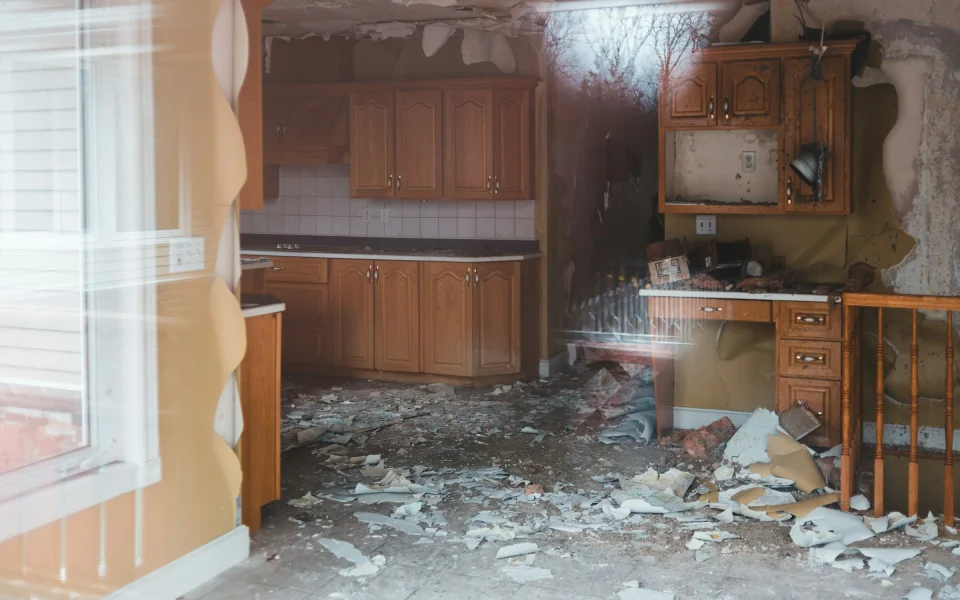
Storm & Flood Damage Cleanup
Hurricane, nor'easter, heavy-rain flooding, and storm-related water intrusion — we respond as crews and site conditions allow, extract, dry, demo, and rebuild. Bergen County experiences serious storm seasons; rebuilds are routine work for our crews.
Storm Damage Cleaned Up
Bergen County storm seasons (Hurricane Ida 2021 was a recent benchmark) cause heavy basement flooding, roof damage with interior water, blown-in window failures, and tree-damage water intrusion. Crews and dry-out equipment may be in heavy demand during storm events — we respond as fast as conditions allow and stay through the rebuild.
- Hurricane and nor'easter rapid-response intake
- Water extraction from basements, ground floors
- Roof-leak interior cleanup and tarping coordination
- Demolition of saturated drywall, flooring, insulation
- Structural drying and dehumidification
- Full rebuild of damaged interior spaces
Serving homeowners throughout all 70 Bergen County municipalities. View our Bergen County service areas.
Storm & Flood Damage Guides
First-hour triage and drying calls that limit what a flood destroys.
First-Hour Triage
- Storm-event assessment: roof, window, foundation, and yard water-entry points documented before remediation begins.
- Structural integrity and power safety gate entry; flooded panels and compromised floors are treated as hazards, not just wet finishes.
- Tarping, board-up, and extraction run in parallel with documentation so insurance photos still show the event as found.
- After the storm passes, safety gates entry: structural sag, gas smell, and submerged electrical all get cleared before cleanup starts.
- Emergency dry-in (tarps, board-up) stops ongoing intrusion first — mitigation can't outrun an open roof.
Planning a project like this? Get an estimate.
Structural Drying & Dehumidification
- Equipment is sized to the flooded volume and to how long water sat — longer dwell means deeper material wetting.
- Contaminated materials are removed per category before clean drying begins; you cannot dry sewage into a livable finish.
- Daily readings and dry-standard sign-off gate the start of reconstruction after the storm event.
- Storm losses spread wide and shallow — moisture mapping finds every wet room before equipment is placed, not after mold announces one.
- Regional storms strain equipment supply county-wide; our staging plan sizes gear to the whole loss on day one.
Planning a project like this? Get an estimate.
Demo & Material Removal
- Wet drywall, flooring, and insulation are removed to dry framing with a clear photo log for insurance.
- Cut lines stop at dry material; over-demo and under-demo both hurt the claim and the rebuild.
- Contaminated materials leave the site promptly so drying can work on what remains.
- Groundwater and wind-driven rain are treated as contaminated — affected porous materials come out rather than dry in place.
- Debris and removed materials are documented room by room; the manifest becomes the claim's demolition schedule.
Planning a project like this? Get an estimate.
Insurance Documentation
- Storm entry points, water lines, and material damage are photographed before cleanup erases the story.
- Scope of loss and moisture documentation protect against coverage disputes after the storm chaos settles.
- Flood vs wind-driven rain distinctions matter for policies — we document what we observe; the carrier decides coverage.
- Storm claims involve wind vs flood distinctions that decide which policy pays — documentation is built to answer that question.
- Date-stamped photos of exterior damage, water lines, and debris fields anchor the file before anything is moved.
Planning a project like this? Get an estimate.
Rebuild Coordination
- Single-contractor coordination: demo, trade work, and rebuild handled as one project to reduce handoff errors and timeline drift.
- Written scope with milestone payment schedule; weekly progress check-ins.
- Rebuild sequencing prioritizes envelope (roof, siding, windows) so interior work proceeds protected.
- Long-lead exterior materials order at scope approval — storm season strains supply exactly when everyone needs it.
- Phased reoccupancy is planned where possible: bedrooms and kitchen return first while secondary spaces finish.
Planning a project like this? Get an estimate.
Response & Rebuild Timeline
- Lead times depend on crew scheduling, material availability, weather, and inspection turnaround.
- Most projects sequence: demo (1–3 days), rough trades (3–7 days), inspections, rebuild + finish (2–6 weeks depending on scope).
- Cabinet, custom-stone, and specialty finish lead times can exceed 8 weeks — order timing locked at contract.
- Storm events queue the whole region — early intake position matters, and honest scheduling beats optimistic promises.
- Mitigation runs days; envelope repairs and interior rebuild phase over weeks to months depending on materials and adjuster timing.
Planning a project like this? Get an estimate.
Your Storm Response Process
Consultation
We take the call, route crews based on conditions, stabilize the area, and document for insurance.
Scope & materials
We inspect water entry points, structural and interior damage, and itemize scope including roof-leak coordination if applicable.
Build
Extraction, drying, demo, and source-side repair coordination (roof, window, foundation).
Final walkthrough
Rebuild interior, document for insurance, final walkthrough.
Storm Work Is Safety, Dry, Then Rebuild
After a storm or flood, entry safety and source control come first. Contaminated water changes what can be cleaned versus removed. Extraction and structural drying are documented so rebuild does not trap moisture.
We separate mitigation from rebuild scopes so insurance files and finish work stay aligned. Matching floors and cabinets after a multi-room event takes salvage decisions, not only demo.
For active emergencies start at emergency water damage. For rebuild after dry-out, see also water damage rebuild. Use the form below when you need a coordinated recovery plan.
Frequently Asked Questions
24/7 emergency intake is available, but during major storm events Bergen County experiences extreme call volume. Same-day or next-day response is typical when crews and site conditions allow.
Wind damage and storm-related water from above (roof leak, window failure) is typically covered. Ground/flood water from rising water tables is usually NOT covered without separate flood insurance.
We coordinate with roofing contractors for emergency tarping. Once the structure is sealed, we proceed with interior dry-out and rebuild.
Highly variable. Simple ceiling-and-drywall rebuilds: 2-4 weeks. Major multi-room storm damage: 6-16 weeks.
Yes. Bergen Restoration is a registered New Jersey Home Improvement Contractor (NJHIC# 13VH08865500) with commercial general liability and workers' compensation coverage. Documentation is available on request, and homeowners should verify credentials before hiring any contractor.
Enormously, for both scope and coverage: wind-driven openings, roof-path water, and rising ground water are different perils with different protocols. We identify the entry story and document it.
Roof tarps, board-ups, extraction, and power-safety checks — stopping ongoing damage first. Rebuild scoping follows once the structure is stable and dry.
Storm queues are real; triage runs by active-damage severity. Honest ETA at intake, stabilization guidance by phone while you wait, and no promises we can't keep.
We coordinate structure-affecting removal within the rebuild scope; standalone yard cleanup routes to tree services. The line is whether the house is involved.
Documentation lands adjuster-ready — cause, extent, moisture logs, itemized scope. The claim runs on your policy's clock; the drying and stabilization never wait on it.
Where the damage teaches, the rebuild answers — ice-and-water shield at the roof edges, better flashing, backflow protection, and drainage that routes the next storm past instead of in.
Part of our Water Damage Restoration, Bergen County NJ service family — explore Basement Water Damage, Water Damage Rebuild, Burst Pipe Cleanup, Emergency Response, Kitchen Rebuild, Structural Drying, and Demo & Rebuild.
Get Your Estimate
For active water intrusion or storm damage, call our 24/7 intake line. Otherwise, send your address and a few details — we will follow up with the next response step. Same-day or next-day response is typical when crews and site conditions allow.
Commercial general liability and workers’ compensation coverage. Documentation available on request.
Or send project details
For non-urgent inquiries, fill out the form below — we'll follow up with a plan.