
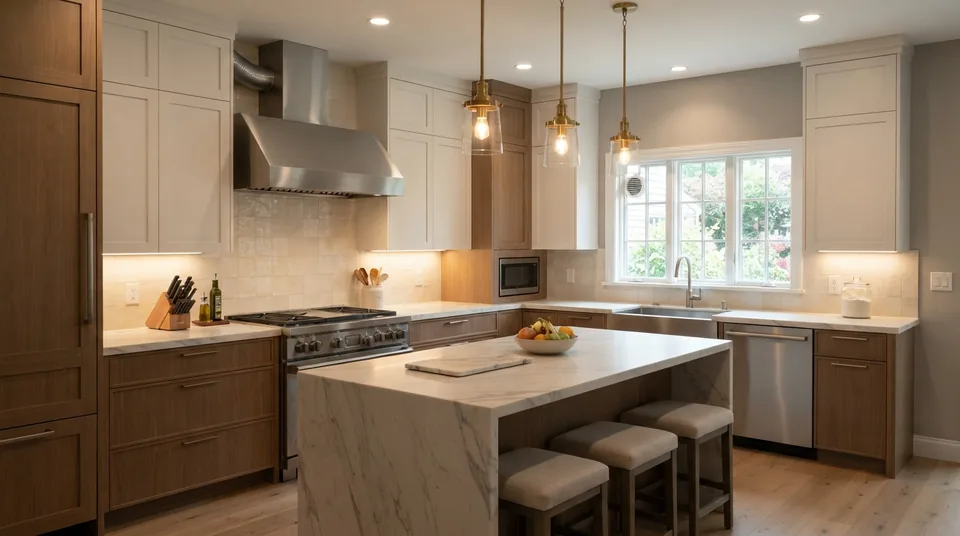
Straight answer: the number on a kitchen quote is mostly cabinets, layout moves, and how many systems you touch — not the backsplash tile you argued about on Saturday.
People ask “what does a remodel cost?” like there’s a sticker price. There isn’t. There are scopes, and then there are the decisions that shove you from one scope into the next. This is the map of those decisions. It’s not a free estimate — it’s so you stop comparing two quotes that aren’t even describing the same job.
Three jobs people call a “remodel”
Before any dollar talk, name which job you mean.
Refresh. Same footprint. Doors or boxes stay or get replaced in place. Paint, hardware, maybe counters and appliances. Plumbing and electrical mostly leave the walls alone. This is the lightest ticket and the shortest disruption.
Mid-range redo. New cabinets, new counters, better lighting, a real hood, appliances. Sink or range might shift a little. Some electrical and plumbing work. This is where a lot of Bergen County family kitchens actually land.
Full gut / layout change. Walls open. Island appears. Sink moves. Gas or electric reroutes. Maybe a wall comes out. Permits and inspections show up for real. Time and money both jump — not because someone is greedy, but because you’re rebuilding the room that feeds the whole house.
If one contractor prices a refresh and another prices a gut, the “cheaper” one isn’t winning. You’re shopping different products. And a full custom kitchen quoted at a fraction of every other bid isn’t a bargain — it’s a different scope, a missing line item, or a problem later.
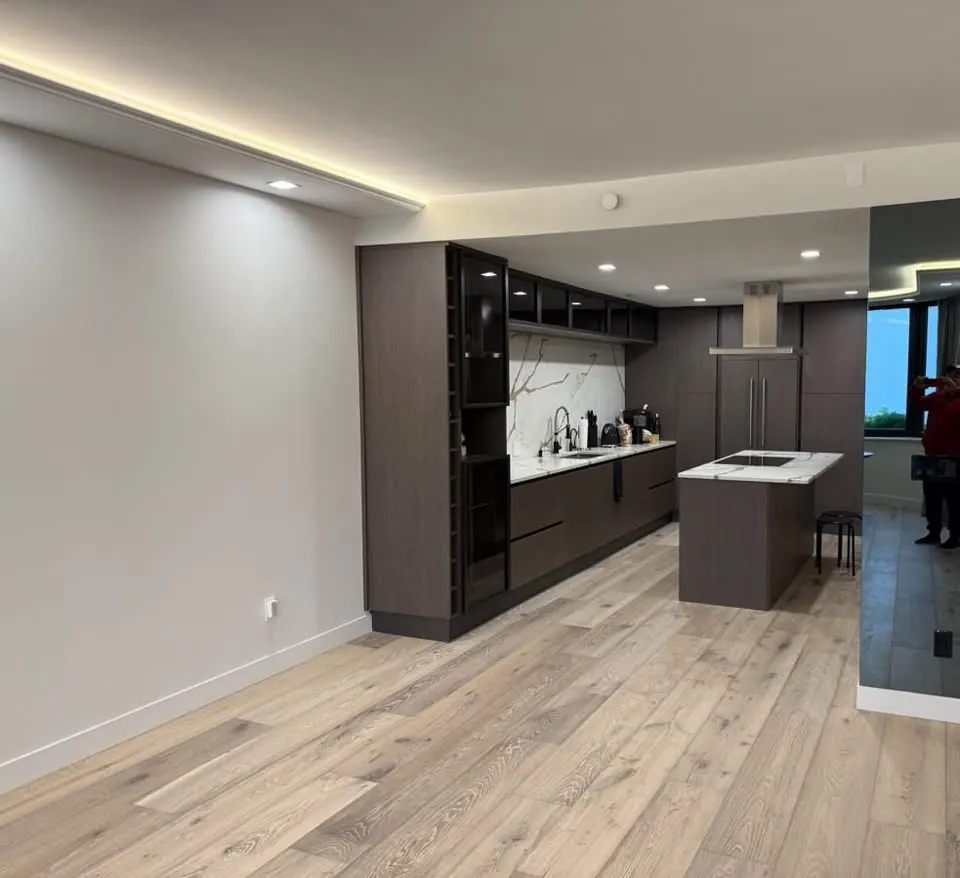
Where the money actually goes
Cabinets usually dominate. Stock vs semi-custom vs custom isn’t a vibe preference — it’s lead time and labor. Custom can sit many weeks in the queue before a truck shows up. And cheap boxes that don’t hang level ruin expensive stone.
Layout moves. Moving the sink means plumbing — routing, venting, and floor repair, not just distance. An island means dedicated circuits, sometimes gas, sometimes structural questions if you’re opening a wall. In Bergen County’s older colonials, capes, and split-levels, the wall between a closed kitchen and the dining room is often load-bearing — figure that out before demo, not after the dust hits the hallway. Our layout changes and open-concept pages cover what that involves.
Ventilation. A hood ducted to the exterior removes cooking moisture, heat, and grease from the house in a way a recirculating unit can’t — recirculating filters the air and returns it. Some condo and multifamily buildings genuinely can’t duct out; know which case yours is before you fall in love with a range.
Electrical and lighting. Dedicated circuits, GFCI where it belongs, island power, layered lights. Underpowered kitchens fail inspection — or fall short every night you cook.
Counters. Material matters; sequence matters more. Template after cabinets are set. Order of operations saves remakes.
Appliances. Spec early. A range that doesn’t fit the opening is an avoidable, expensive mistake.
Labor, protection, and living through it. Dust walls, a temporary kitchen, schedule slip when cabinets are late — all real money even when they don’t appear as a shiny product line. In an occupied Bergen County house, protection and daily cleanup are part of the job, not a courtesy.
Contingency. Older houses hide wiring and plumbing surprises behind the walls. Budget a reserve on purpose — and know how the contract handles it. An allowance is a placeholder number for a selection you haven’t made yet; a fixed selection is priced and locked. Quotes heavy on allowances look cheaper and drift more. Change orders should be written, priced, and signed before the work happens — that’s protection for both sides. Spending the reserve on upgrades mid-job is how contingency dies and stress takes over.
What shoves a bid up (or down)
- Keep layout, replace finishes — lower cost, faster
- Move sink / range / gas — permits, trades, time
- Island or wall removal — structural plus mechanical work; plan for engineering
- Custom cabinets — higher cost, longer lead
- Stock cabinets, simple plan — lower cost if the install quality holds
- Exterior-ducted hood — worth it; not free
- Same-place plumbing — saves money
- “We’ll decide after demo” — expensive chaos
Timeline is part of the price
Three clocks run on every kitchen, and only one of them is swing-days on site:
Design and scope. Layout, appliance places, and selections. Weeks, mostly yours — and the cheapest place to change your mind.
Permits, ordering, and lead time. Cabinet queues are often the longest single wait in the project, and permit review runs town by town. This clock runs before and during early site work.
On-site construction. Demo → rough-ins and inspections → walls → floors → cabinets → counters → backsplash → fixtures → appliances. A refresh is the short end; a gut with layout change is the long end. The kitchen renovation page breaks the on-site stages down by scope.
Rushing the middle to “save money” is how you fail a rough inspection with finish materials already on the truck.
Permits without the panic
Cosmetic same-layout work without wiring, plumbing, gas, or structural changes is often a lighter path — confirm with the town for the job address. Moving sinks, new circuits, gas lines, or walls is multi-trade territory, and rough inspections happen before things get closed up. Don’t invent a countywide rule from a neighbor’s story: Bergen County towns administer their own permits, and the building department at the property address is the one that matters.
How to compare two quotes that don’t match
Ask each bid to answer, in writing:
- Is this a refresh, mid-range, or gut — in their words?
- What’s happening to the sink, range, and any walls?
- Cabinet type and lead time?
- Hood ducted to exterior — yes or no?
- What’s excluded — flooring, painting, appliances, disposal of the old kitchen?
- How are allowances and contingency handled when the wall opens?
If a quote is a single lump sum that says “kitchen remodel,” you’re not looking at a scope. You’re looking at a placeholder.
What this is not
This is not “invest in resale and print money.” A good kitchen returns comfort and function first, and can help a sale — treat resale math as a bonus, not the plan. Price the kitchen you’ll cook in for years, with a reserve for the surprises in old walls.
If you’re early in the decision
Lock layout and appliance places before anyone swings a bar. Price cabinets as the spine of the budget. Decide whether you’re moving water and gas. Then compare bids that describe the same job.
When you’re ready for a walk-through that talks cost drivers before paint colors, start at the kitchen renovation page.