
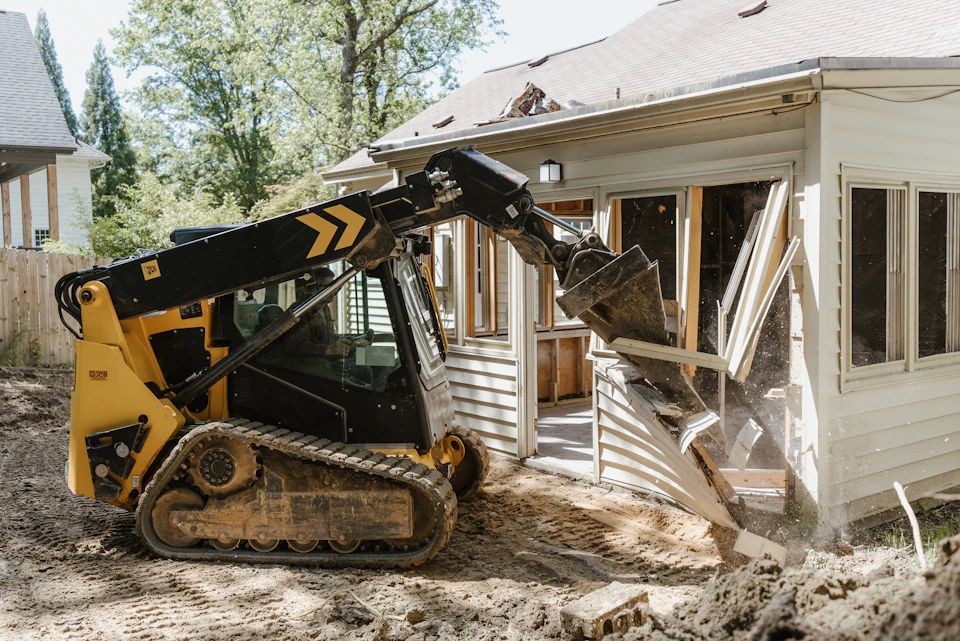
Debris Haul-Off & Disposal
Dumpsters staged, material sorted and recycled where possible, and a broom-clean site across Bergen County — the cleanup side of a demolition, and offered on its own after other trades.
Debris Haul-Off & Disposal
A finished job is only finished when the debris is gone. We stage the right container, load material out along protected pathways, sort recyclable and reusable material where possible, and leave a broom-clean site — not a pile in the driveway. It is the cleanup side of our demolition services, and we also handle it on its own.
- Dumpster staging & sizing
- Material load-out & sorting
- Recycling & reuse where possible
- Licensed disposal of the rest
- Driveway & haul-path protection
- Broom-clean site at handoff
Debris & Disposal Guides
Sorting, staging, recycling, and disposal decisions that keep a cleanup on schedule and out of the driveway.
Scoping the Haul-Off
A cleanup starts with an honest read of how much is there and what kind of material it is. We size the job before staging a container so it doesn’t overflow or sit half-empty.
- Volume estimate: the amount of debris is walked and estimated so the container or load count is right the first time.
- Material types: heavy rubble, bulky wood, mixed construction debris, and yard waste are identified because they load and dispose differently.
- Access & path: how material leaves — stairs, doorways, driveway, container placement — is planned before day one.
- Standalone or staged: whether it follows our own demolition or another trade’s work changes how the haul-off is scheduled.
- Written scope: volume, sorting, and disposal are put in writing so the cleanup is agreed before it starts.
Planning a project like this? Get an estimate.
Dumpster Staging & Site Protection
Where the container goes and how the route to it is protected decides whether a haul-off leaves the property better than it found it.
- Container placement: the dumpster is staged to keep the carry short while keeping the driveway and access usable.
- Driveway protection: boards or mats guard the driveway surface from the container and the weight it carries.
- Haul path: floors, stairs, lawn, and finishes along the route out are covered before loading begins.
- Weight limits: the container is loaded to its weight rating, not just its volume, so it can be hauled legally.
- Daily cleanup: loose debris and fines are cleared as work goes instead of tracked through the site.
Planning a project like this? Get an estimate.
Sorting, Recycling & Reuse
Not everything has to go to landfill. Sorting as material is loaded lets recyclable and reusable debris be diverted where the receiving facility accepts it.
- Metal: steel, copper, and other metals are pulled for recycling rather than dumped.
- Clean wood & cardboard: untreated wood and packaging are separated for diversion where practical.
- Clean concrete: broken concrete and masonry are often accepted for crushing and reuse.
- Licensed disposal: mixed and non-divertible debris is disposed of through licensed facilities that accept construction and demolition waste.
- Honest diversion: what can actually be recycled depends on the facility; we don’t promise diversion we can’t deliver.
Planning a project like this? Get an estimate.
Asbestos, Lead & Hazards
Some material never belongs in a general debris container. In older Bergen County homes, suspect material is cleared by the right specialists before the surrounding cleanup proceeds.
- No abatement by us: we do not perform asbestos or lead abatement; that work is done by licensed specialists.
- Testing first: where materials are suspect, testing determines what is present before anything is disturbed or hauled.
- Kept separate: flagged hazardous material is handled by licensed abatement specialists and kept out of the general debris stream.
- Sequenced work: removal of the surrounding material proceeds once the abatement is documented as complete.
- Older homes: pre-1980s homes are treated with extra caution around flooring, insulation, and coatings until testing clears them.
Planning a project like this? Get an estimate.
Broom-Clean Site & Handoff
The point of a haul-off is a site you can hand to the next trade or walk back into. The last of the debris and the dust are cleared, not left to settle.
- Full clear-out: the remaining debris is loaded out so nothing is left staged around the work area.
- Swept down: floors and surfaces are broom-swept so the space is workable, not gritty.
- Protection removed: the floor and path protection is pulled once the last load is out.
- Ready for next: the site is left ready for the rebuild, the next trade, or your own use.
- Container hauled: the dumpster is removed on schedule so it doesn’t sit on the driveway after the work is done.
Planning a project like this? Get an estimate.
What Drives Cost & Timeline
Debris removal is priced by the work, not a flat truckload. Volume, material type, and access move the number and the schedule more than anything else.
- Volume: more material means more container capacity or more loads, which is the biggest single driver.
- Material type: heavy rubble hits weight limits fast; bulky light debris fills space — both are priced in.
- Access: tight driveways, long carries, and stairs all add labor time to the haul-out.
- Sorting & diversion: separating recyclables takes time but can reduce disposal cost where facilities accept it.
- Hazardous material: where abatement is needed, specialist work is scheduled and completed first, which affects timing.
Planning a project like this? Get an estimate.
Your Debris Removal Process
Walkthrough & scope
We confirm what has to go, estimate the volume and material types, check for anything hazardous, and put the haul-off and disposal in writing.
Staging & protection
We stage a right-sized dumpster, protect the driveway and haul path, and set up sorting where it makes sense before loading begins.
Load-out & sorting
Material is carried out along protected pathways and sorted for recycling and reuse where practical — hazardous material kept separate.
Disposal & broom-clean
The rest is disposed of through licensed facilities, the container is hauled on schedule, and the site is left swept and clear.
What Debris Haul-Off Actually Takes
Hauling is more than a truck and a trip. It lives or dies on sorting, weight, and access. The honest version:
Sorting for diversion
Metal, clean wood, cardboard, and clean concrete are separated as material is loaded, so recyclable and reusable debris is diverted where facilities allow instead of everything going to landfill.
Sizing the container
A dumpster fills by volume but is capped by weight. Heavy material like concrete, tile, and plaster hits the limit fast, so both are planned for when we size the container or count the loads.
Getting it out clean
The route from the work area to the container runs across finished floors, lawn, or a driveway. It is protected end to end so the haul-out doesn’t scuff or crack what stays.
Handled, not mixed in
Where testing flags asbestos, lead, or other hazardous material, it is handled by licensed abatement specialists and kept out of the general debris stream. We do not perform abatement ourselves. It is a common step ahead of a restoration cleanout.
Cleanup That Actually Ends Clean
Haul-off is the part everyone underestimates. A renovation, a teardown, or a storm cleanup can leave more material than a couple of trips will clear — and a pile in the driveway is its own problem while it sits there.
We size the container to the job, sort recyclable and reusable material where practical, and dispose of the rest through licensed facilities. Where testing flags asbestos or lead, that material is handled by licensed abatement specialists, not thrown in with general debris. We do not perform abatement ourselves.
Debris removal is part of our demolition services, and we also handle it on its own after other trades, a basement rebuild, or a water-damage cleanout. Request an estimate with a description of what needs to go and any access concerns.
Built Around the Scope
From a single wall to a full gut — matched to what your renovation, repair, or teardown actually needs.
Interior & Selective Demolition
Taking out one wall, a kitchen, or a bath while the rest of the home stays intact and protected. Precise, contained, and swept clean.
Start your estimateFull Gut-Outs & Tear-Outs
Strip a room or an entire level down to studs and subfloor — the clean-slate demo that whole-home renovations and rebuilds start from.
Start your estimateDeck, Shed & Structure Removal
Old decks, sheds, and concrete flatwork removed and hauled away — clearing the site for a new build or an open yard.
Start your estimateKitchen & Bath Tear-Outs
Cabinets, counters, tile, tubs, and fixtures pulled out cleanly with plumbing and gas capped — the room handed off ready for the rebuild.
Start your estimateConcrete & Flatwork Removal
Old slabs, patios, walkways, and footings broken out and carted off — the ground left clear for new concrete, a deck, or landscaping.
Start your estimateDebris Haul-Off & Disposal
Dumpsters staged, material sorted and recycled where possible, and a broom-clean site at the end — no leftover pile for you to deal with.
Start your estimateFrequently Asked Questions
Yes. Debris haul-off is part of our demolition services, and we also handle it on its own — after another trade finishes, a teardown, a renovation, a cleanout, or a storm. Tell us roughly what is there and we will size the job.
On a walkthrough we estimate the volume and the material types, then stage a right-sized dumpster or plan the truck loads. Heavy material like concrete and tile fills weight limits faster than light, bulky debris, so both weight and volume are planned for.
Volume, material type, and access. Heavy or mixed loads, tight driveways, and long carry paths all add time. We confirm the scope on a walkthrough before quoting rather than guessing by the truckload.
We sort recyclable and reusable material — metal, clean wood, clean concrete, cardboard — where practical, and dispose of the rest through licensed facilities. What can be diverted depends on what the receiving facility accepts, so we keep it honest rather than promising recycling we can’t deliver.
We do not perform abatement. Where testing flags asbestos, lead, or other hazardous material, it is handled by licensed abatement specialists and kept out of the general debris stream. Removal of the surrounding material proceeds once that work is documented as complete.
Yes. Bergen Restoration is a registered New Jersey Home Improvement Contractor (NJHIC# 13VH08865500) with commercial general liability and workers’ compensation coverage; documentation available on request.
Related Bergen services: Whole-Home Renovation, Basement Renovation, and Water Damage Restoration.
Get Your Estimate
Reach us by phone or email and tell us about your debris removal or cleanup. We will follow up with the next best step for your home.
Commercial general liability and workers’ compensation coverage. Documentation available on request.
Let's Talk About Your Project
Tell us what you have in mind — we'll follow up with a plan.