
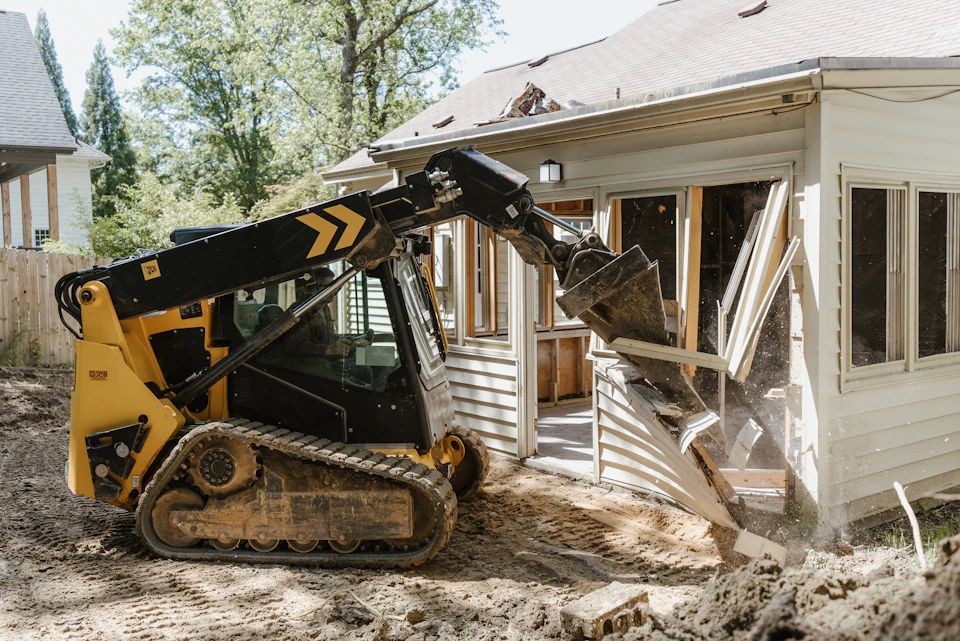
Deck, Shed & Structure Removal
Old decks, sheds, and detached outbuildings taken down and hauled away across Bergen County — footings and anchors pulled, the ground graded clean, and the site left clear for a new build or an open yard.
Clearing the Yard, Down to Grade
Old structures don’t just need to come off — they need to come out. We take down decks, sheds, detached garages, and outbuildings, pull the footings and anchors, and haul every load away, leaving the ground graded and clear. It’s part of our demolition services, and it’s the clean first step before a new build or an open yard.
- Old deck tear-down & removal
- Shed & outbuilding demolition
- Detached garages & small structures
- Footings, posts & anchors pulled
- Ground backfilled, graded & raked clean
- Debris haul-off & disposal
Structure Removal Guides
Scope, footings, utilities, and disposal decisions that decide whether a teardown goes smoothly or turns into a surprise.
Scoping the Removal
A clean teardown starts with a clear list of what goes and what stays. We walk the yard, confirm access, and plan the haul path before anything comes down.
- Keep vs remove: every structure — deck, shed, garage, playset — is confirmed ahead of time so nothing that stays gets taken by mistake.
- Attachment points: where a deck ties into the house or a fence, we plan a clean cut so the house and remaining structures aren’t damaged.
- Access & path: how framing and debris leave the yard — gates, driveway, dumpster placement, equipment room — is planned before day one.
- What’s underneath: footings, posts, and buried lines are located first so the dig-out doesn’t hit a surprise.
- Written scope: the removal plan, footing handling, and haul-off are put in writing before work starts.
Planning a project like this? Get an estimate.
Footings, Posts & Anchors
The structure above grade is the visible half. A removal is only finished when what’s below the surface comes out too.
- Concrete footings: deck and post footings are broken out and carted off rather than buried or left in place.
- Buried posts: 4x4 and 6x6 posts set in concrete are dug and pulled, not cut off at grade.
- Ground anchors: shed anchors, helical piles, and tie-downs are removed so nothing snags the next build.
- Backfill & grade: the holes left behind are backfilled and the ground graded so the area drains and sits level.
- Clear for next: the result is open ground ready for new footings, a slab, or landscaping.
Planning a project like this? Get an estimate.
Buried Lines & Hazards
Detached structures are often fed by utilities and sometimes built with older materials. Both are handled before demolition.
- Locate first: power, gas, water, and irrigation lines run to a shed, garage, or outdoor kitchen are located before digging.
- Disconnect safely: those services are shut off and disconnected by qualified trades before the structure comes down.
- Asbestos & lead: we do not perform abatement; where testing flags asbestos-cement siding or lead paint we coordinate with licensed abatement specialists to clear it first.
- Older structures: pre-1980s sheds, garages, and outbuildings are treated with extra caution around siding and roofing until testing clears them.
- Overhead & neighbors: clearances, fences, and shared lines are checked so the teardown stays on your property.
Planning a project like this? Get an estimate.
Debris, Haul-Off & Recycling
A removal isn’t done until the material is gone. Haul-off and disposal are built into the scope.
- Load-out: decking, framing, roofing, and concrete are carried out along protected paths and staged in a right-sized dumpster or truck.
- Sorting: clean wood, metal, and concrete are separated for recycling where practical rather than sent straight to landfill.
- Licensed disposal: the remainder goes to licensed facilities that accept construction and demolition debris.
- Hazardous handling: anything testing flags as hazardous is handled by licensed abatement specialists, not thrown in with general debris.
- Clean handoff: the ground is raked and left ready for the next build or an open yard.
Planning a project like this? Get an estimate.
Permits, Setbacks & Property Lines
Some removals are permit-free; others need paperwork and an inspection. We confirm what yours requires up front.
- Permit needs: small sheds often need none; a large deck, garage, or footing-set structure usually needs a demolition permit.
- Coordination: for projects that require permits, we coordinate permit paperwork, trade documentation, and inspection scheduling with your town and licensed professionals where required.
- Setbacks: where a structure sits relative to property lines and setbacks is confirmed before it comes down or is rebuilt.
- Shared structures: fences, retaining walls, or decks shared with a neighbor are identified and handled carefully.
- Utilities markout: underground utility markout is arranged before any footing dig-out begins.
Planning a project like this? Get an estimate.
What Drives Cost & Timeline
Removal pricing follows the work. Size, footings, access, and disposal move the number and the schedule most.
- Size & count: a single shed is a short job; a large deck, detached garage, or several structures at once run longer.
- Footings & anchors: the number and depth of concrete footings drive both labor and disposal weight.
- Access: gates, tight side yards, and equipment room affect how fast the structure and debris can leave.
- Disposal volume: haul-off is priced by amount and type; concrete and roofing weigh and cost more to remove.
- Testing & abatement: where asbestos or lead testing is needed, specialist abatement is scheduled and completed before demolition.
Planning a project like this? Get an estimate.
Your Removal Process
Walkthrough & scope
We visit your property, confirm exactly which structures come out, check for buried utilities and hazards, and put the removal footprint, footing handling, and haul-off in writing.
Utilities & disconnects
We arrange utility markout, and the power, gas, water, or sprinkler lines run to the structure are located and disconnected by qualified trades before anything comes down.
Teardown & dig-out
Crew takes the structure down cleanly, then pulls the footings, posts, and anchors — with debris contained and the work area kept safe throughout.
Haul-off & grade
Debris is loaded out and disposed of through licensed facilities, footing holes are backfilled, and the ground is graded and raked clean for what comes next.
What Deck & Structure Removal Actually Involves
Taking a structure down cleanly is planned before the first board comes off. The honest version:
What’s coming out
We confirm exactly which structures go — deck, shed, detached garage, playset — and what stays. Where a deck ties into the house, shared fences, and nearby landscaping are noted so the teardown stops exactly where it should.
Footings, posts & anchors
The visible structure is the easy part. Concrete footings, buried posts, and ground anchors come out too, so the ground is genuinely clear — not seeded with obstructions the next build has to fight.
Buried lines & shut-offs
Sheds, outdoor kitchens, and detached garages often have power, gas, water, or sprinkler lines run to them. Those are located and disconnected by qualified trades before demolition. Where older siding or coatings test positive for asbestos or lead, we stop and coordinate with licensed abatement specialists.
Debris out, ground graded
Framing, decking, roofing, and broken-out concrete are loaded and disposed of through licensed facilities. Footing holes are backfilled or graded, and the site is raked clean — ready for a new outdoor build or an open yard.
Clearing the Site for What’s Next
Most removal problems are planning problems. A footing left in the ground, a sprinkler line cut by surprise, or a deck ledger torn off without protecting the house are all avoidable when the teardown is scoped first. We plan the removal before we start it.
In older Bergen County structures, we treat suspect siding, roofing, and coatings with caution: where testing flags asbestos or lead, we coordinate with licensed abatement specialists to clear the material before demolition proceeds. We do not perform abatement ourselves.
Structure removal is part of our demolition services, and usually clears the way for what’s next — a new outdoor build, a home renovation, or simply open yard. Request an estimate with a description of what needs to come out and any access or utility concerns.
Built Around the Scope
From a single wall to a full gut — matched to what your renovation, repair, or teardown actually needs.
Interior & Selective Demolition
Taking out one wall, a kitchen, or a bath while the rest of the home stays intact and protected. Precise, contained, and swept clean.
Start your estimateFull Gut-Outs & Tear-Outs
Strip a room or an entire level down to studs and subfloor — the clean-slate demo that whole-home renovations and rebuilds start from.
Start your estimateDeck, Shed & Structure Removal
Old decks, sheds, and concrete flatwork removed and hauled away — clearing the site for a new build or an open yard.
Start your estimateKitchen & Bath Tear-Outs
Cabinets, counters, tile, tubs, and fixtures pulled out cleanly with plumbing and gas capped — the room handed off ready for the rebuild.
Start your estimateConcrete & Flatwork Removal
Old slabs, patios, walkways, and footings broken out and carted off — the ground left clear for new concrete, a deck, or landscaping.
Start your estimateDebris Haul-Off & Disposal
Dumpsters staged, material sorted and recycled where possible, and a broom-clean site at the end — no leftover pile for you to deal with.
Start your estimateFrequently Asked Questions
Yes to all of them. We take down old decks (attached or freestanding), sheds, detached garages, gazebos, playsets, and small outbuildings. We remove the structure down to grade, pull the footings and anchors, and rake the ground clean so the spot is ready for a new build or an open yard.
Most single-structure removals are a one-day job; larger decks, detached garages, or several structures at once run longer. Haul-off is part of the scope — deck boards, framing, roofing, and any concrete are loaded out and disposed of through licensed facilities, so you get a clean, graded site instead of a pile in the yard.
Yes. Removing the structure is only half the job — concrete footings, buried posts, and ground anchors come out too so the ground is genuinely clear for whatever comes next. We break out and cart off the footings and backfill or grade the holes rather than leaving them behind.
Older Bergen County sheds and outbuildings sometimes have asbestos-cement siding or lead paint. We do not perform abatement. Where testing flags hazardous material we coordinate with licensed abatement specialists to clear it before demolition proceeds; teardown of suspect material does not begin until that work is documented as complete.
It depends on the structure and your municipality. Small sheds under a set size often need none; a large deck, detached garage, or anything on a footing usually does. For projects that require permits, we coordinate permit paperwork, trade documentation, and inspection scheduling with your town and licensed professionals where required.
Yes. Bergen Restoration is a registered New Jersey Home Improvement Contractor (NJHIC# 13VH08865500) with commercial general liability and workers’ compensation coverage; documentation available on request.
Related Bergen services: Demolition, Backyard & Outdoor, and Whole-Home Renovation.
Get Your Estimate
Reach us by phone or email and tell us about your deck, shed, or structure removal. We will follow up with the next best step for your home.
Commercial general liability and workers’ compensation coverage. Documentation available on request.
Let's Talk About Your Project
Tell us what you have in mind — we'll follow up with a plan.