
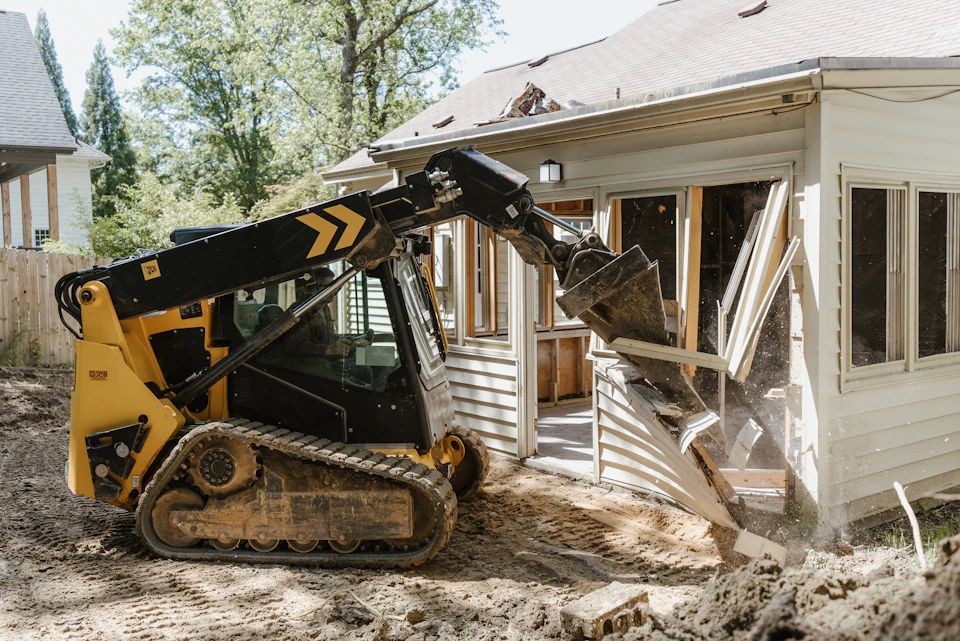
Kitchen & Bath Tear-Outs
Cabinets, counters, tile, tubs, and fixtures pulled out cleanly for Bergen County kitchen and bath remodels — water and gas lines shut off and capped, and the room handed off ready for the rebuild.
A Clean Room, Ready to Rebuild
A good tear-out is careful, not reckless. We pull cabinets, counters, tile, tubs, and fixtures, cap the water and gas lines, and protect everything that stays — handing the room off as a clean shell. It’s part of our demolition services, and it’s the quiet first step that lets the kitchen or bath rebuild go smoothly.
- Cabinet & countertop removal
- Tile, backsplash & flooring tear-out
- Tub, shower & vanity removal
- Fixtures & appliances disconnected
- Water & gas lines shut off and capped
- Debris haul-off & disposal
Tear-Out Guides
Scope, protection, utilities, and disposal decisions that decide whether a tear-out hands off clean.
Scoping the Tear-Out
A clean tear-out starts with a clear line between what’s removed, what’s kept, and what stays. We walk the room and confirm it before any tool comes out.
- Remove vs keep: cabinets, counters, tile, tub, shower, and vanity are marked for removal; anything staying is called out.
- Salvage calls: cabinets, appliances, or fixtures worth reusing are separated and set aside instead of landing in the debris.
- Down to what: whether the room strips to drywall or all the way to studs and subfloor is confirmed with the rebuild plan.
- What’s behind it: plumbing, wiring, and gas inside walls and cabinets are located first so the strip doesn’t hit a surprise.
- Written scope: the tear-out footprint, cap points, and haul-off are put in writing before work starts.
Planning a project like this? Get an estimate.
Protection & Dust Control
Kitchens and baths sit in the middle of the home. The craft is keeping the tear-out contained so the rest stays livable.
- Sealed barriers: doorways and openings are closed off with plastic and zip walls so dust doesn’t travel through the house.
- Surface protection: floors, stairs, and adjacent rooms are covered before demolition begins, not after.
- Air management: extraction and negative air are used where tile and plaster dust warrant it.
- Contained pathway: the route cabinets and debris travel out is protected end to end.
- Daily cleanup: the site is knocked down and swept as work progresses instead of left to pile up.
Planning a project like this? Get an estimate.
Water, Gas & Electrical Shut-Offs
Before a kitchen or bath is stripped, the services feeding it are made safe — capping is prep work, with licensed trades where required.
- Water & drain: supply and drain lines to the room are shut off and capped so an open line doesn’t flood the strip.
- Gas: gas serving a range or water heater in the space is shut off and capped, coordinating licensed gas trades where required.
- Electrical: circuits feeding the room are disconnected by qualified trades before cabinets and fixtures come out.
- Not our license: we don’t perform licensed plumbing or gas fitting; new connections are made by the licensed trades on the rebuild.
- Asbestos & lead: we do not perform abatement; where testing flags old flooring, mastic, or paint we coordinate with licensed abatement specialists first.
Planning a project like this? Get an estimate.
Walls, Islands & Load Paths
Some kitchen and bath tear-outs stop at finishes; others take out a wall to open the space. Structure is confirmed first.
- Load check: before a wall between a kitchen and the next room comes out, we confirm whether it carries load.
- Partition walls: non-load-bearing walls come out straightforwardly once utilities inside them are cleared.
- Temporary shoring: a load-bearing wall gets temporary support before any framing is removed.
- Beam or header: the permanent beam or header replacing the wall is confirmed with the design professional first.
- Permits where required: for projects that require permits, we coordinate permit paperwork, trade documentation, and inspection scheduling with your town and licensed professionals where required.
Planning a project like this? Get an estimate.
Debris, Haul-Off & Recycling
A tear-out is only finished when the old room is gone. Haul-off and disposal are built into the scope.
- Load-out: cabinets, counters, tub, and broken tile are carried out along protected pathways and staged in a right-sized dumpster.
- Sorting: metal, clean wood, and cabinetry are separated for recycling or donation where practical.
- Licensed disposal: the remainder goes to licensed facilities that accept construction and demolition debris.
- Hazardous handling: any material testing flags as hazardous is handled by licensed abatement specialists, not general debris.
- Clean handoff: the room is swept to a clean shell, ready for the rebuild.
Planning a project like this? Get an estimate.
What Drives Cost & Timeline
Tear-out pricing follows the work, not a flat rate. Scope, access, and disposal move the number and the schedule most.
- Partial vs full gut: pulling finishes is quick; a strip to studs and subfloor runs longer and generates more debris.
- Room size & fixtures: a small powder room is a short job; a large kitchen with an island and appliances runs longer.
- Access: stairs, tight doorways, and dumpster placement affect how fast material can leave.
- Disposal volume: haul-off is priced by amount and type; tile, cast-iron tubs, and stone weigh and cost more.
- Testing & abatement: where asbestos or lead testing is needed, abatement is scheduled and completed before the tear-out.
Planning a project like this? Get an estimate.
Your Tear-Out Process
Walkthrough & scope
We visit your home, confirm what comes out and what’s saved for reuse, check for structural and hazard concerns, and put the tear-out footprint and haul-off in writing.
Protection & shut-offs
We seal off the room, protect floors and the path out, and shut off and cap the water, drain, gas, and power serving the space — coordinating licensed trades where required.
Tear-out
Crew strips the room cleanly — cabinets, counters, tile, and fixtures out, walls opened or taken to studs where the rebuild calls for it — with dust contained and daily cleanup throughout.
Haul-off & handoff
Debris is loaded out and disposed of through licensed facilities, and the room is swept to a clean shell, ready for the kitchen or bath rebuild.
What a Clean Kitchen or Bath Tear-Out Involves
A good tear-out is contained and capped before anything is pulled. The honest version:
What comes out, what’s kept
Cabinets, counters, tile, flooring, tub, shower, and vanity are marked for removal; anything you’re reusing is set aside first. On a full kitchen or bath renovation the tear-out is scoped down to the studs when the rebuild calls for it.
Containing dust and debris
Kitchens and baths sit in the middle of the house. Sealed doorways, floor and stair protection, and a protected path out keep tile dust and debris from spreading through living space while the room is stripped.
Water and gas made safe
Water, drain, and gas lines serving the room are shut off and capped before fixtures come out, coordinating licensed plumbing and gas trades where required. Electrical to the space is disconnected so the tear-out is safe and dry.
A Clean Tear-Out Sets Up the Rebuild
Most tear-out problems are planning problems. A line cut before it was capped, dust that spread through the house, or a cabinet you meant to keep sent to the dumpster are all avoidable when the scope is thought through first. We plan the strip before we start it.
In older Bergen County homes, we treat suspect floor tile, sheet flooring, mastic, and paint with caution: where testing flags asbestos or lead, we coordinate with licensed abatement specialists to clear the material before the tear-out proceeds. We do not perform abatement ourselves.
A kitchen or bath tear-out is part of our demolition services and leads straight into the rebuild — a kitchen renovation or bathroom renovation. Request an estimate with a description of what needs to come out and any access or hazard concerns.
Built Around the Scope
From a single wall to a full gut — matched to what your renovation, repair, or teardown actually needs.
Interior & Selective Demolition
Taking out one wall, a kitchen, or a bath while the rest of the home stays intact and protected. Precise, contained, and swept clean.
Start your estimateFull Gut-Outs & Tear-Outs
Strip a room or an entire level down to studs and subfloor — the clean-slate demo that whole-home renovations and rebuilds start from.
Start your estimateDeck, Shed & Structure Removal
Old decks, sheds, and concrete flatwork removed and hauled away — clearing the site for a new build or an open yard.
Start your estimateKitchen & Bath Tear-Outs
Cabinets, counters, tile, tubs, and fixtures pulled out cleanly with plumbing and gas capped — the room handed off ready for the rebuild.
Start your estimateConcrete & Flatwork Removal
Old slabs, patios, walkways, and footings broken out and carted off — the ground left clear for new concrete, a deck, or landscaping.
Start your estimateDebris Haul-Off & Disposal
Dumpsters staged, material sorted and recycled where possible, and a broom-clean site at the end — no leftover pile for you to deal with.
Start your estimateFrequently Asked Questions
Either. We can gut a kitchen or bath completely — cabinets, counters, tile, flooring, tub, shower, and vanity — or take out just the section you’re changing while the rest stays put and protected. We seal the room off with dust barriers and floor protection so the tear-out stays contained to where the remodel needs it.
Yes. Anything you want to keep — cabinets, a vanity, appliances, light fixtures, or trim — is called out before we start, removed carefully, and set aside instead of landing in the debris. Everything else is pulled and hauled off.
A single bathroom tear-out is often a day; a full kitchen or a gut down to the studs runs longer, and any hazardous-material testing can add time. We confirm the schedule up front and hand the room off swept and ready so the rebuild can start without delay.
As prep for the rebuild, yes — we shut off and cap the water, drain, and gas lines serving the space so the room is safe to work in, coordinating licensed plumbing and gas trades where required. We don’t perform licensed plumbing or gas fitting ourselves; the connections for your new kitchen or bath are made by the licensed trades on the rebuild.
Older Bergen County homes can have asbestos in old floor tile, sheet flooring, or mastic, and lead in paint. We do not perform abatement. Where testing flags hazardous material we coordinate with licensed abatement specialists to clear it before the tear-out proceeds.
Yes. Bergen Restoration is a registered New Jersey Home Improvement Contractor (NJHIC# 13VH08865500) with commercial general liability and workers’ compensation coverage; documentation available on request.
Related Bergen services: Demolition, Kitchen Renovation, and Bathroom Renovation.
Get Your Estimate
Reach us by phone or email and tell us about your kitchen or bath tear-out. We will follow up with the next best step for your home.
Commercial general liability and workers’ compensation coverage. Documentation available on request.
Let's Talk About Your Project
Tell us what you have in mind — we'll follow up with a plan.