
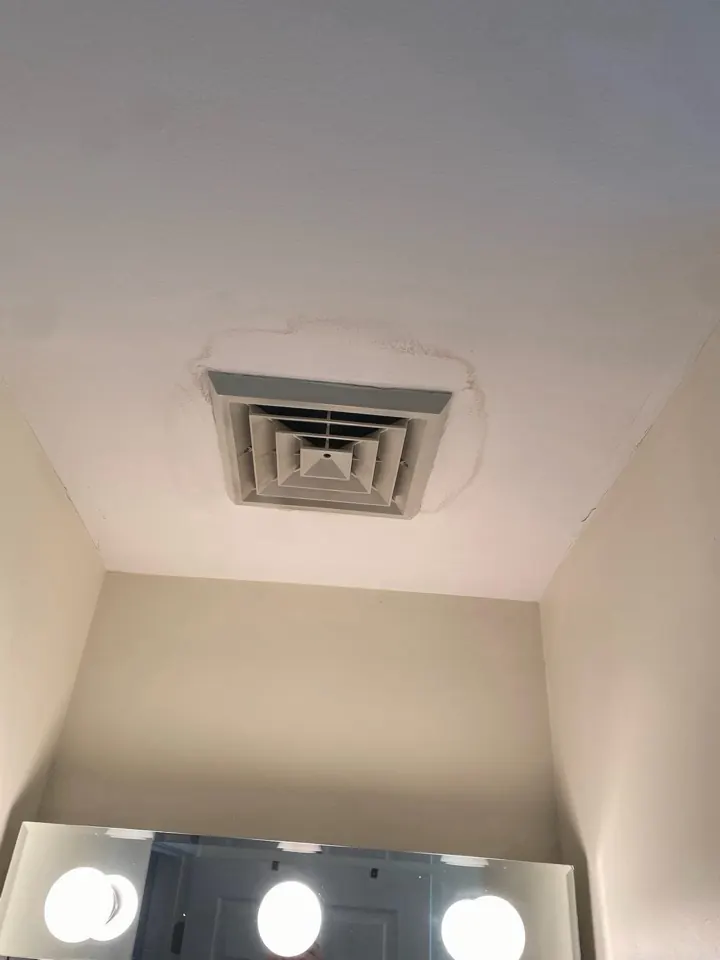
Rain season here is hours of rain and wind, then freeze–thaw and ice buildup through winter. If a ceiling is dripping or the rec room has standing water, that’s water damage restoration first — before anything on the roof.
Rain through a ceiling and a sewage backup are not the same cleanup. What showed up in the room decides how careful the dry-out has to be and what the fix looks like. If water keeps returning from the same corner after every storm, or the room smells, get someone to look at it rather than painting over the stain.
Roof first, then follow the water down
If you’re not sure about the roof or the drainage, the first move is to look. From the yard, check for missing or lifted shingles and a cracked drainage pipe. From the attic, if you can get there safely, wet insulation or staining on the wood usually shows up before a stain reaches the bedroom wall.
A small failed shingle on a dry slope is often a same-day roof repair. Several leaks, a soft deck, or a roof at the end of its life is a replacement conversation. An active drip should be covered until the slope is safe, then permanently fixed — start with roof leak repair. Stay off steep or two-story work, and don’t DIY without proper safety gear.
Waiting until the next long rain can turn a spot fix into a wet ceiling and a much bigger water damage restoration job in your living room.
Gutters and drainage
Gutters are a system: the trough, the outlets, the downspouts, and where that water lands. A clean trough that still dumps water against the foundation soaks the wall anyway. In wooded yards in Ridgewood, Wyckoff, Mahwah, and parts of Paramus, leaves pack the eave every fall and shove water under the edge of the roof — that can stain a soffit or damage siding, but the fault is the gutter.
From the ground, look for sagging runs, joints that drip, hangers pulling out of the wall, and downspouts that end a foot from the house. Soft or rotten fascia has to be fixed before new gutters go up. Isolated leaks and loose hangers are a quick repair; widespread rust, a trough too small for the roof, or a pitch that ponds is a gutter replacement.
Extend the discharge away from the wall. That’s often the cheapest honest move on a 1950s–70s house, and it can head off exterior damage or having to cut into the basement slab later.
The walls after wind and rain
Siding sheds rain; the wrap and flashing behind it keep water out of the wall. From the yard, look for panels that folded, gaps at corners, and the roof-to-wall joint where water should kick out into the gutter, not behind the cladding. On a split-level with brick below and siding above, that joint is where problems hide until the water is already in the wall.
A few damaged panels can be a repair if the wall behind is dry and you can still match the profile. Widespread failure, rot at the bottom, or a wet wall when you open it points to an elevation or full siding replacement. Don’t hang new panels over wet sheathing, and don’t caulk every gap shut — some gaps are how vinyl moves. This is a post-storm look, not the whole re-side decision.
The yard, and where water sits against the house
Fifty to seventy years of freeze–thaw on these lots often reverses the original slope. Water sits in the side yard or runs toward a walk-out on a split-level. Neighbor driveways and new patios make it worse, and Meadowlands-adjacent yards stay wet longer after a storm — so look at your own lot.
Start with what you can see: downspout extensions, soil pitched away from the foundation, and buried yard drains. Yard drainage covers those surface fixes.
Below grade: the basement
Water at the seam where the slab meets the wall after rain, with no dramatic crack, is the usual Bergen seepage on boom-era block and poured walls. In Teaneck, Fort Lee, and similar towns that turns a finished lower level into a finish-and-mold problem.
Regrade and longer downspouts are the first move on a lot of these houses. If water still comes in at that seam, basement waterproofing is the path — from a sump replacement up to a much larger project. An interior perimeter drain and a yard interceptor are different jobs; you can start with a french drain, but at this point it’s usually better to stop the DIY investigation and have a professional look.
The sump is the last stage, and some storms here bring high water and power loss at once. On a finished lower level, a sump with battery backup is part of the system. A discharge that ends next to the wall just sends the same water back to the seam.
Handle it before the next rain season
If the house is dry, the roof looks sound from the yard, the gutters dump away from the wall, and the basement stays dry after a hard rain, you don’t need a panic visit because rain is on the forecast.
If you can still see where water ran — a stain line, a sagging gutter, soil against the siding, a wet seam at the slab — show that to someone who will explain where the water is coming from instead of selling. That’s rain season here: follow the water.
Bergen Restoration can inspect the roof, gutters, walls, yard, and basement in one visit and say which of those jobs your house actually needs.