
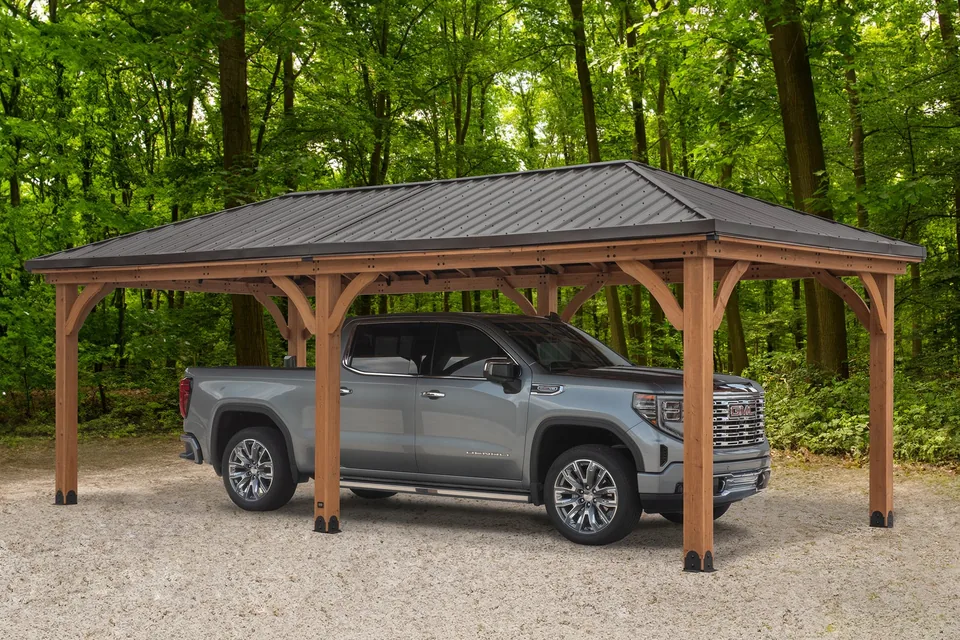
Carport Installation
Wood, steel, and aluminum carports — installed with concrete footings, proper anchoring, and optional electrical for EV charging or lighting.
Single & Double Carports
Carports protect vehicles from sun and weather without the cost of a full garage. We handle single- and double-vehicle carports in wood, steel, and aluminum — with concrete footings, proper anchoring, and optional electrical for EV charging, lighting, or outdoor outlets.
- Wood, steel, or aluminum carports
- Single- or double-vehicle sizes
- Concrete footings below frost line
- Metal roofing or shingled options
- Optional electrical for EV charging
- Attached-to-house or freestanding
Carport Guides
Footing, material, and setback calls that decide if a carport holds up.
Footings & Anchoring
- Footings below frost line keep the structure from heaving with the freeze — the difference between plumb posts and a leaning carport by year three.
- Anchor hardware is sized to wind uplift as well as snow load; a roof this open catches wind like a sail.
- Surface-mount anchors into an existing slab work only when the slab itself is thick enough to hold them — verified, not assumed.
- Post bases elevate wood off the concrete — ground contact is how carport posts rot from the bottom up.
- Uplift hardware matters more than gravity hardware — an open roof is a wing in a storm.
Planning a project like this? Get an estimate.
Cedar, Composite, or Steel
- Cedar frames warm up the structure and need seal or stain on a cycle — wrong for owners who want zero upkeep.
- Steel spans clean and shrugs off weather, but dark finishes can heat the underside of a low roof in summer sun.
- Composite cladding and trim hold a clean line with less maintenance; structure behind it is still sized for snow and wind.
- Material choice sets the maintenance calendar: steel needs nothing, cedar needs sealing cycles, composite splits the difference.
- Matching the house's trim and color keeps the carport reading as architecture instead of equipment.
Planning a project like this? Get an estimate.
Roof System
- Asphalt shingle on a framed roof matches the house and reads as architecture rather than accessory.
- Metal panels shed snow fast and span wider with less framing — the practical pick for clean modern lines.
- Polycarbonate keeps daylight over the parking pad, useful where the carport would otherwise darken adjacent windows.
- Roof pitch follows the house's lines where visible — a flat-roof carport on a colonial reads temporary.
- Snow-load framing is engineered, not guessed — open structures collect drifts their walls can't buttress.
Planning a project like this? Get an estimate.
Permits & Setbacks
- Most permanent carports need a building permit; setbacks and height limits vary by Bergen municipality.
- We prepare the plot sketch and coordinate submittal and inspections with your town.
- Review windows often run 1–4 weeks; we do not pour footings ahead of approval when the town requires it.
- Property-line setbacks pinch carport placement on narrow lots — the survey drives the site plan.
- Attached carports trigger different review than freestanding — the connection to the house changes the code path.
Planning a project like this? Get an estimate.
Electrical & EV Charging
- Lighting and GFCI outlets make a carport usable after dark; outdoor-rated boxes and wet-location fittings are required.
- EV charger circuits are sized to amperage and panel capacity; running conduit at build time is cheaper than trenching later.
- Licensed electrical trades pull permits for new circuits; we leave pull-string or conduit for future chargers even if you skip the head now.
- Conduit runs during footing work make later electrical trivial — the trench is open exactly once.
- Motion-activated lighting covers arrivals without a switch hunt in the rain.
Planning a project like this? Get an estimate.
Cost & Timeline Guide
- Single-car freestanding pads land $8k–$18k; attached or double-car with better roof systems push $15k–$32k.
- Footings below frost, electrical for lighting, and driveway tie-in are the usual adders beyond a kit price.
- Accessory-structure permits and setbacks vary by town; 4–7 weeks is typical once engineering (if required) clears.
- Freestanding builds dodge house-connection complexity; attached builds gain convenience — cost follows the choice.
- Most carports build in 1–2 weeks after permits; footing cure time is the hidden calendar line.
Planning a project like this? Get an estimate.
Your Carport Process
Consultation
We visit your yard, discuss your goals, measure, and verify feasibility.
Design & selections
We confirm model, materials, and finishes plus any site work required.
Build
Site prep, anchor or post-base work, structure assembly, roofing panel installation, and finish details.
Walkthrough
Safety inspection, use walkthrough, and warranty registration.
Frequently Asked Questions
Installed carports vary by size, material, footing requirements, roof type, attachment method, and whether electrical work is included. Simple metal carports are generally lower cost; custom wood or attached carports with footings, lighting, or EV-ready electrical cost more.
Usually yes when the structure is permanent, attached to the house, uses footings, includes electrical, or exceeds local size thresholds. Requirements vary by municipality, so the project should be confirmed with the town before work begins.
Yes. Lighting, outdoor outlets, and EV-ready electrical can be included when the scope allows. Electrical work should use outdoor-rated components, GFCI protection where required, and permits/inspection.
Yes, depending on structure, siding, roofline, setbacks, drainage, and local code. Some homes are better suited to freestanding carports.
Simple kit-style carports may take a few days after site preparation. Custom or attached builds can take longer depending on footings, electrical, inspections, and material lead times.
Yes. Bergen Restoration is a registered New Jersey Home Improvement Contractor (NJHIC# 13VH08865500) with commercial general liability and workers' compensation coverage. Documentation is available on request, and homeowners should verify credentials before hiring any contractor.
Wood post-and-beam for looks that match the house, steel for spans and low maintenance, and aluminum for lighter builds. Roofing matches or complements your home — shingle, metal, or polycarbonate panels.
Built right, yes — frost-depth footings, posts sized for the span, and roof framing rated for Bergen County snow. That's the difference between a built carport and a mail-order canopy.
Common request — the structure is the same bones as a pavilion. Lighting, an outlet run, and a finished ceiling turn a parking bay into usable covered space when the car's out.
Posts need frost-depth concrete footings; the parking surface can stay gravel, pavers, or your existing driveway. A slab is optional, not required — which keeps carports cheaper than garages.
Carport: weather protection at a fraction of the cost, faster build, lighter permitting. Garage: security, storage, and conditioned space, at several times the price. If you're weighing enclosure, see our garage additions page.
Most towns treat a carport as an accessory structure. Building one without a permit is how it gets a stop-work. We check setbacks and snow load before we order steel or timber.
A kit is cheaper if the town allows it and the anchors hold snow. A custom wood or steel carport is a structure with footings that survives longer.
Stop-work and a tear-down orders are common. Most towns treat a carport as an accessory structure. Check setbacks before you order.
Part of our Outdoor Living & Backyard, Bergen County NJ service family — explore Custom Decks, Outdoor Enclosures, Gazebos & Pergolas, Greenhouses, Grill Gazebos, Built-In Grills, Outdoor Bars, Outdoor Hot Tub & Jacuzzi, Outdoor Kitchens, Outdoor Saunas, Patio Accents, and Swing Sets & Playhouses.
Get Your Estimate
Reach us by phone or email and tell us about your carport project. We will follow up with the next best step for your home.
Commercial general liability and workers’ compensation coverage. Documentation available on request.
Let's Talk About Your Project
Tell us what you have in mind — we'll follow up with a plan.