
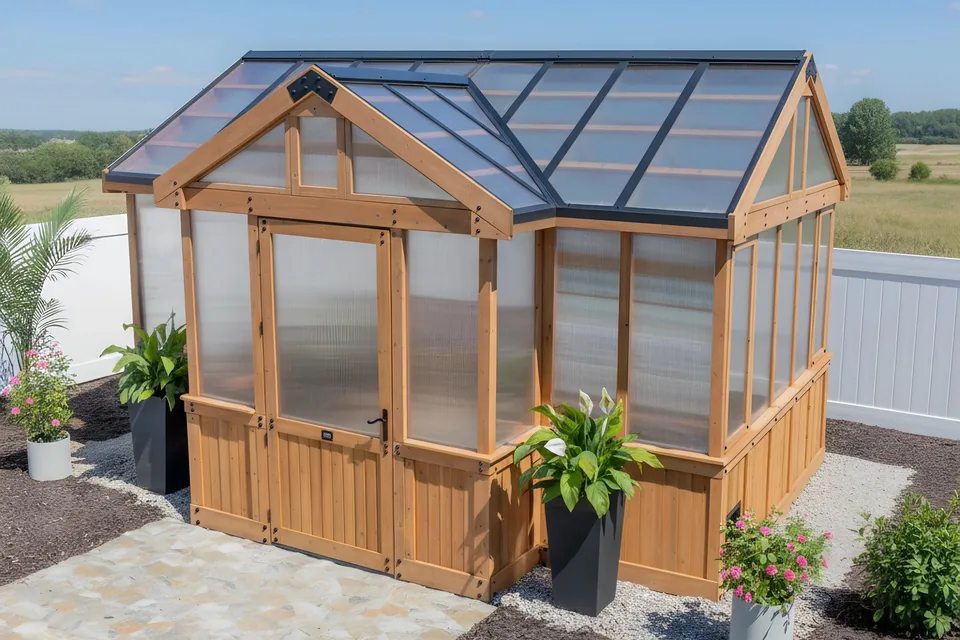
Greenhouse Installation
Cedar-framed greenhouses with polycarbonate glazing, proper foundations, and optional climate control — for four-season growing in Bergen County.
Cedar-Framed Greenhouses
Backyard Discovery and custom cedar greenhouses with polycarbonate glazing, proper foundation, ventilation, and optional heating for year-round growing. Sizes from 6x8 hobby to 14x14+ production.
- Cedar & aluminum greenhouse frames
- Polycarbonate or glass glazing
- Concrete slab or pier foundations
- Automatic venting systems
- Optional electric heating & grow lighting
- Integrated raised-bed gardens
Pricing and timelines are planning ranges. Final cost and schedule depend on site conditions, access, structural requirements, materials, permit review, inspections, weather, material lead times, and scheduling availability.
Greenhouse Guides
Frost-line footing, glazing, and climate choices that grow through a Bergen winter.
Foundation & Frost Line
- A permanent greenhouse gets a concrete pad or piers below frost line — glazing racks and doors bind on structures that move.
- The pad slopes to drain; a greenhouse floor sees water daily by design.
- Anchoring is engineered against wind — a glazed box is the lightest, most wind-caught structure in any yard.
- Knee-wall foundations lift glazing off snow line and splash zone — the detail that keeps low panels clean and intact.
- Orientation matters: ridge running east-west maximizes winter light when growing season extends.
Planning a project like this? Get an estimate.
Glazing Selection
- Glass gives the clarity and the classic look, at the highest weight and cost — and demands the stiffest frame.
- Twin-wall polycarbonate insulates far better than single glazing, extends the season, and shrugs off hail.
- Single-wall panels suit budget and seasonal use; they give up winter unless heating fights for it.
- Glazing choice is a heating-bill decision — twin-wall's insulation halves winter heat loss against single glass.
- Hail and branch exposure favor polycarbonate; sightline gardens favor glass — the site picks.
Planning a project like this? Get an estimate.
Heating, Cooling & Ventilation
- Automatic vent openers — wax-cylinder, no power needed — do the daily temperature work a gardener cannot be present for.
- Circulation fans prevent the stratified hot-top/cold-bottom split that stresses plants in any glazed space.
- Winter growing needs a heater sized to glazing area and target temperature; shade cloth handles the July problem.
- Thermostat-controlled exhaust with intake louvers automates the daily swing a manual grower can't chase.
- Thermal mass (water barrels, masonry) smooths day-night swings for free.
Planning a project like this? Get an estimate.
Water & Irrigation
- Hose bib or hard-piped supply is placed for hose reach and winter isolation so lines can be drained before freeze.
- Drip irrigation zones match bed layout; overspray on glazing and frames becomes algae and early corrosion.
- Floor drains or a pitched slab path move irrigation runoff out of the structure instead of into the foundation edge.
- Winterized supply (frost-proof hydrant or drain-back line) keeps water available in the months that need the greenhouse most.
- A potting-bench sink with simple drainage saves a thousand trips to the house.
Planning a project like this? Get an estimate.
Electrical & Heat
- GFCI protection, outdoor-rated circuits, and dedicated runs for mats and grow lights prevent nuisance trips and shock risk in wet air.
- Heat load is calculated for winter nights; undersized heaters freeze plants and oversize units short-cycle.
- Licensed electricians install the circuits; we place outlets where hoses and benches will not destroy the covers.
- Heater circuits size to worst-case January nights — undersized heat fails exactly when the collection can't take it.
- Timers and controllers for lights, heat mats, and fans run on protected circuits with a spare planned.
Planning a project like this? Get an estimate.
Cost & Timeline Guide
- Hobby kits with a simple pad $8k–$18k; heated and vented mid-size $20k–$45k; full climate control $50k–$120k+.
- Foundation type, glazing system, and year-round water/power are the cost levers — not the catalog frame alone.
- Electrical and plumbing permits apply when you heat and irrigate; 4–9 weeks once the pad and kit arrive.
- Foundation and utilities routinely exceed the kit price — the honest budget doubles the catalog number.
- Spring demand books installers out — a fall build is ready for the first seed tray.
Planning a project like this? Get an estimate.
Your Greenhouse Process
Consultation
We visit your yard, discuss your goals, measure, and verify feasibility.
Design & selections
We confirm model, materials, and finishes plus any site work required.
Build
Site prep, foundation or anchor work, frame and glazing assembly, ventilation installation, and finish details.
Walkthrough
Safety inspection, use walkthrough, and warranty registration.
Greenhouses Need Pad, Water & Power
A lasting greenhouse is more than a kit frame. Foundation or pad type, glazing, ventilation, and winter water shutoffs decide whether plants survive a New Jersey cold snap and whether the structure still sits square in five years.
We plan hose bibs or irrigation, GFCI power for mats and lights, and drainage so irrigation runoff does not undermine the pad or soak a foundation edge.
See the wider backyard outdoor hub for related structures. Request an estimate with intended year-round use and lot access for delivery.
Frequently Asked Questions
For 2026, hobby greenhouses (6x8 to 8x10) $4,000–$10,000 installed. Larger (10x12 to 14x14) $10,000–$22,000+. Climate control adds $2,000–$8,000.
Depends on size and town. Small hobby greenhouses often permit-exempt. Larger or those with foundations typically require permits. We confirm with your town.
Yes. Electric heaters, propane heaters, or radiant floor heat options. Requires dedicated circuit for electric.
Concrete pier footings for most residential greenhouses. Full slab for heated / production greenhouses.
Bergen Restoration is a registered New Jersey Home Improvement Contractor (NJHIC# 13VH08865500) with commercial general liability and workers’ compensation coverage; documentation available on request.
Twin-wall polycarbonate insulates better, shrugs off hail and snow, and costs less — it's the practical pick for four-season Bergen County growing. Glass looks premium and lasts decades but needs a stronger frame and more heating. We build both.
South or southeast exposure with winter sun clear of the house and tree lines. Setback rules apply like any accessory structure, and drainage matters — a greenhouse in a low spot fights standing water all spring. Siting is the first thing we check on-site.
Yes — power for heat, fans, and lights, and a frost-proof water line if you want year-round use. Utility trenching is coordinated with licensed trades where required, same as our outdoor kitchens.
Snow-load rating is a build decision, not luck. Proper footings, adequate frame gauge, and glazing rated for load — kit greenhouses installed on grade without those fail in heavy winters. Ours are anchored to footings and rated for the climate.
Yes — roof vents or automatic openers, circulation fans, and shade cloth for summer. A greenhouse without ventilation cooks plants by June; it's part of the standard scope conversation.
Lean-to greenhouses against a south wall work well and share the house's warmth. Attachment changes the permit picture and flashing details at the wall — for projects that require permits, we coordinate paperwork and inspections with your town.
A framed greenhouse with a foundation and ventilation can. A plastic kit on the lawn will not. We plan snow load, heat, and a pad that drains rainwater and melting snow.
A kit on a pad you already have is cheaper. A framed house with a foundation, heat, that’s planned to hold snow load is a whole build. Winter here decides which one lasts.
Part of our Outdoor Living & Backyard, Bergen County NJ service family — explore Carports, Custom Decks, Outdoor Enclosures, Gazebos & Pergolas, Grill Gazebos, Built-In Grills, Outdoor Bars, Outdoor Hot Tub & Jacuzzi, Outdoor Kitchens, Outdoor Saunas, Patio Accents, and Swing Sets & Playhouses.
Get Your Estimate
Reach us by phone or email and tell us about your greenhouse project. We will follow up with the next best step.
Commercial general liability and workers’ compensation coverage. Documentation available on request.
Let's Talk About Your Project
Tell us what you have in mind — we'll follow up with a plan.