
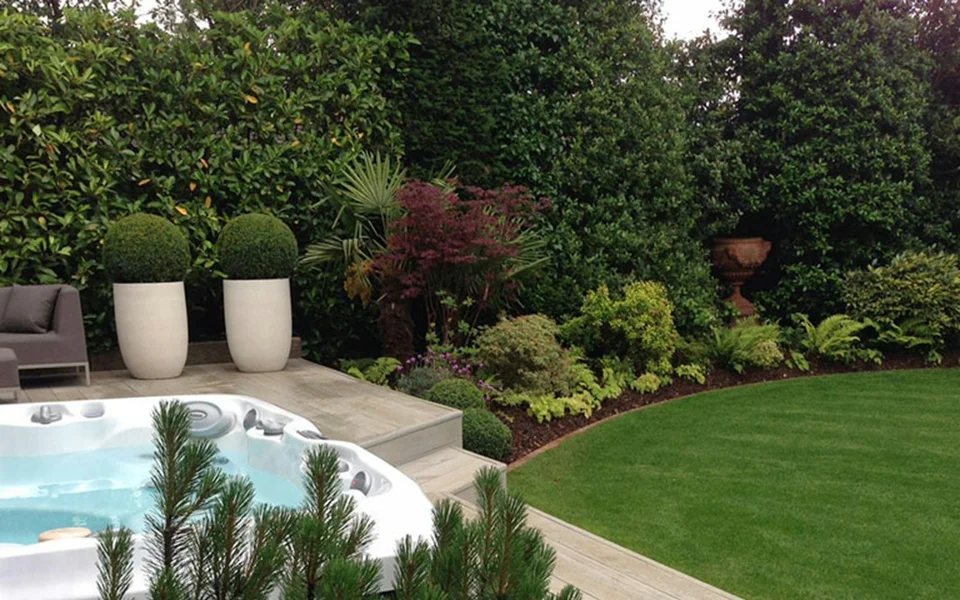
Outdoor Hot Tub & Jacuzzi Installation
Professional outdoor hot tub and jacuzzi installation for Bergen County homes. Concrete pad, dedicated 240V electrical by licensed trades, privacy screens, and deck tie-ins — done by a registered NJ contractor.
Outdoor Hot Tub & Jacuzzi Installation
We handle the full installation for outdoor hot tubs and jacuzzis — from site preparation and concrete pad work to 240V electrical runs coordinated with licensed electrical trades, structural deck integration, and privacy screening. We work with portable and in-ground spa configurations across all major brands.
- Concrete pad pour and site leveling
- 240V/50A dedicated circuit coordination with licensed electrical trades
- Deck cutout and structural reinforcement for deck-mounted spas
- Privacy screen and pergola tie-in framing
- Drainage and overflow routing
- All major brands: Hot Spring, Bullfrog, Jacuzzi, Sundance
- Above-ground portable and semi-inground configurations
- Coordination with licensed electricians and plumbers where required
Pricing and timelines are planning ranges. Final cost and schedule depend on site conditions, access, structural requirements, materials, permit review, inspections, weather, material lead times, and scheduling availability.
Serving homeowners throughout all 70 Bergen County municipalities. View our Bergen County service areas.
Outdoor Hot Tub & Jacuzzi Guides
Pad, wiring, and drainage calls that decide where an outdoor tub can sit.
Concrete Pad Design
- Pad size, thickness, and reinforcement are set for filled spa weight — a standard 4-inch patio slab is not enough for thousands of pounds.
- Frost-depth footings or thickened edges keep the pad from heaving and twisting the shell.
- Level and flatness tolerances matter; a twisted pad permanently stresses the spa frame.
- Crane or side-yard access is confirmed before the spa is ordered — the delivery path decides the model as often as the pad does.
- Pad placement respects the service side — every spa has one panel that technicians need reachable.
Planning a project like this? Get an estimate.
Electrical Coordination
- 240V/50A GFCI with a disconnect in sight of the spa is the usual code path for outdoor units.
- Panel capacity and trench or conduit route are verified before the spa delivery day.
- Licensed electricians pull the permit; bonding the shell and equipment is part of a listed install.
- The disconnect mounts in sight of the spa per code — the safety switch is part of the layout drawing.
- Conduit runs oversize for the distance — voltage drop math applies on long yard runs.
Planning a project like this? Get an estimate.
Drainage & Site Planning
- Pad slopes away from the spa and house so splash and rain do not pond under the cabinet.
- Backwash and drain water need a legal path — not into the neighbor’s yard or the foundation.
- Service access and privacy screening are planned with the location, not added after the crane leaves.
- Splash and backwash water need a route that isn't the neighbor's yard or the foundation.
- Winter access matters in placement — the January walk from door to spa is the real usage test.
Planning a project like this? Get an estimate.
Deck Integration
- Flush deck integration puts the spa rim at seating height — and puts 4,000+ pounds on framing that gets engineered for it.
- Access panels for the equipment bay are designed into the decking; a serviceable spa stays a working spa.
- The deck surface around the rim is slip-conscious and drains away from the tub vault.
- Framing under flush installs is designed wet-rated and ventilated — trapped moisture under decks eats structure.
- Rim height above deck (fully flush vs raised lip) trades entry elegance against splash containment.
Planning a project like this? Get an estimate.
Cover & Privacy
- A rated hard cover with lift-assist is insulation, safety barrier, and weather shield in one — the accessory that is not optional.
- Privacy comes from screens, pergola sides, or planting — planned with the sightlines from neighboring windows, not discovered from the water.
- A windbreak on the prevailing side measurably cuts winter heat loss and makes shoulder-season soaks pleasant.
- Locking covers are the code-recognized safety layer where fencing rules apply to spas.
- Cover lifters need clearance behind or beside the spa — measured before the pad pours.
Planning a project like this? Get an estimate.
Cost & Timeline Guide
- Pad and set can be modest; full equipment pad, privacy screening, and electrical upgrades push the higher end of site-built installs.
- Electrical service capacity, crane or path access, and frost-protected pad design are the usual budget breakers.
- Electrical permit nearly always; schedule follows pad cure and spa delivery more than install labor days.
- Electrical distance and trenching usually cost more than the pad — the yard run is the variable to bid carefully.
- Site-ready to soaking typically runs 2–3 weeks: pad cure, electrical, delivery, fill, and inspection.
Planning a project like this? Get an estimate.
Your Outdoor Hot Tub Installation Process
Site assessment
We visit your yard, measure the site, confirm access, and review electrical panel capacity.
Design & selections
We confirm pad dimensions, electrical routing, spa model, and any deck or privacy work.
Site prep & rough-in
Excavation, concrete pour, and electrical rough-in coordinated with licensed trades before spa delivery.
Installation & finish
Spa placement, licensed electrical coordination where required, plumbing coordination, and final inspection walkthrough.
Frequently Asked Questions
Pad, electrical, and basic installation typically runs $3,500–$8,000 depending on site complexity. Deck reinforcement and privacy screens add cost. The spa unit itself is separate.
Electrical work requires a permit in all NJ towns. Some towns require zoning approval for permanent structures. We coordinate permit paperwork with your town and licensed trades where required.
Yes, with proper structural review. Most residential decks need reinforcement to support a filled spa (400–600+ lbs per square foot). We assess your deck framing before installation.
Most full-size spas require a dedicated 240V/50A GFCI circuit with a disconnect panel within sight of the spa. We coordinate the full electrical run with licensed electrical trades.
Bergen Restoration is a registered New Jersey Home Improvement Contractor (NJHIC# 13VH08865500) with commercial general liability and workers’ compensation coverage; documentation available on request.
A level concrete pad or a properly built reinforced deck section — never bare pavers on grade for a full-size spa. The base outlives the tub; pour it right once.
Close enough that winter use actually happens — the ten-second dash rule — while respecting setbacks and the electrical run. Tubs placed far from the door become summer-only ornaments.
Bergen County winters are the point of a hot tub: a good cover, a maintained heater, and a path you'll shovel. The install detail that matters is the cover lifter clearance — plan it before placement.
Louvered screens, a pergola panel, or planting — designed with the tub, not bolted on after. Sightline checks from neighboring second-story windows are worth two minutes.
Spa electrical runs through a GFCI-protected circuit with a disconnect within sight of the tub, installed by licensed trades and inspected. It's the non-negotiable part of every quote.
Splash and drain-downs need somewhere to go — grade the pad area away from the foundation and the neighbors. A tub that drains toward your basement wall undoes its own relaxation.
They need a pad that will not settle: concrete or an engineered pad the manufacturer accepts. Deck boards alone can crush. Electric requires a licensed disconnect.
Part of our Outdoor Living & Backyard, Bergen County NJ service family — explore Carports, Custom Decks, Outdoor Enclosures, Gazebos & Pergolas, Greenhouses, Grill Gazebos, Built-In Grills, Outdoor Bars, Outdoor Kitchens, Outdoor Saunas, Patio Accents, and Swing Sets & Playhouses. See also Indoor Hot Tub & Jacuzzi Installation.
Get Your Estimate
Tell us about your project. We’ll follow up with the next best step.
Commercial general liability and workers’ compensation coverage. Documentation available on request.
Let’s Talk About Your Project
Tell us what you have in mind — we’ll follow up with a plan.